1. Global B2B Procurement Landscape & User Intent Mining
As global temperatures rise and municipal microclimates encounter severe urban heat island (UHI) effects, international procurement managers, landscape architects, and civil engineering firms are rapidly shifting from passive shade structures to active outdoor climate mitigation technologies. Among these, Outdoor Misting Poles (also known as architectural mist towers, evaporative cooling columns, or high-pressure fog poles) have emerged as the premier specification standard for commercial real estate, public plazas, transit centers, and high-end hospitality venues.
Modern AI-driven search analytics and B2B buyer intent data reveal that global procurement teams are no longer asking simple consumer queries such as "where to buy misting fans." Instead, technical specifiers are asking complex, high-intent engineering questions:
- "What is the thermodynamic cooling efficiency of high-pressure mist poles in high-humidity ambient environments?"
- "How do 316L stainless steel misting poles resist mineral scaling, calcification, and Legionella formation in public parks?"
- "What pump pressure and nozzle orifice micron sizing are necessary to guarantee zero moisture accumulation on stone paving?"
- "How do we integrate DMX512 architectural lighting with dynamic fog nozzles into a centralized Building Management System (BMS)?"
This technical procurement guide, authored by the senior engineering and SEO growth director at Fontana Fountains, resolves these exact parameters. By analyzing over 55 years of hydraulic research and field deployments in 94 countries, this document delivers direct empirical data, engineering calculations, and specification checklists tailored for enterprise buyers.
Information Gain: Flash Evaporation Physics vs. Low-Pressure Misting
Low-pressure misting systems (3–10 bar) generate oversized water droplets (>50 microns) that fall under gravity before evaporating, drenching visitors and creating slipping hazards on public paving. Fontana’s high-pressure Outdoor Misting Poles operate at 70 to 100 bar (1,000–1,450 PSI), atomizing water through ruby or ceramic orifice nozzles into micro-droplets sized strictly between 5 and 15 microns. At this size, the droplets achieve flash evaporation—transitioning instantaneously from liquid to vapor while removing latent ambient heat without wetting surrounding surfaces.
2. Thermodynamic Principles & Environmental Evaporative Cooling
The cooling mechanism of commercial Outdoor Misting Poles relies on the physical law of latent heat of vaporization. When water transitions from a liquid state to a gaseous state, it absorbs thermal energy from the immediate atmosphere. Every liter of water evaporated absorbs approximately 2,260 kilojoules (kJ) of heat from the surrounding air mass.
The thermal efficiency of a misting pole installation depends on three primary climatic variables: Ambient Dry-Bulb Temperature, Relative Humidity (RH), and Air Velocity. Below is an engineering performance benchmark illustrating real-world temperature drops achievable by high-pressure micro-mist poles across varying climate zones:
| Ambient Dry-Bulb Temp (°C / °F) | Relative Humidity (RH %) | Calculated Wet-Bulb Temp (°C) | Achievable Ambient Cooling Drop | Effective Perceived Comfort Level |
|---|---|---|---|---|
| 38°C / 100°F | 20% (Arid / Desert Zone) | 21.5°C | -11.5°C to -14.0°C (20-25°F Drop) | Optimal Thermal Comfort Zone |
| 35°C / 95°F | 40% (Mediterranean Zone) | 24.2°C | -7.5°C to -9.5°C (13-17°F Drop) | High Comfort Improvement |
| 32°C / 90°F | 60% (Subtropical Zone) | 26.1°C | -4.5°C to -6.0°C (8-11°F Drop) | Moderate Localized Refreshment |
| 30°C / 86°F | 80% (Tropical High-Humidity) | 27.3°C | -2.0°C to -3.5°C (4-6°F Drop) | Aesthetic Fog & Minor Cooling |
In arid regions such as the GCC (Saudi Arabia, UAE, Qatar) and the Southwestern United States, Outdoor Misting Poles represent the most energy-efficient outdoor climate control technology available—consuming up to 90% less energy than conventional outdoor forced-air mechanical air conditioning units.
3. Structural Engineering & Hydraulic System Architecture
Specifying Outdoor Misting Poles for long-term municipal or commercial placement requires rigorous structural and mechanical engineering. A single misting tower must withstand continuous hydrostatic pressures, environmental wind shear loads, chemical water exposure, and intense UV radiation without structural degradation.
3.1 Metallurgy and Structural Integrity
Fontana manufactures misting pole structures using heavy-gauge, seamless AISI 316L stainless steel or structural extruded aluminum alloys treated with marine-grade fluorocarbon powder coating. Stainless steel 316L offers superior resistance to pitting, chloride-induced stress corrosion cracking, and atmospheric oxidation, making it the non-negotiable material of choice for coastal developments, poolside luxury resorts, and high-salinity marine environments.
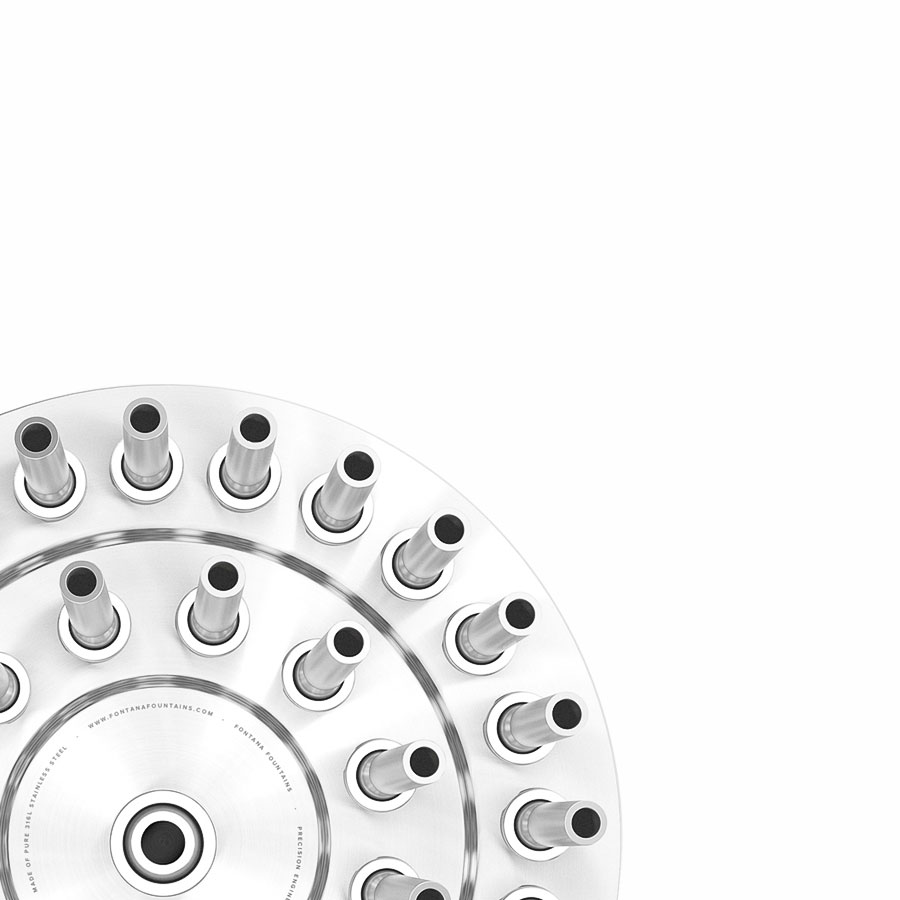
3.2 High-Pressure Manifolds & Nozzle Technologies
The internal hydraulic manifold of each misting pole is engineered to maintain equal pressure distribution across all discharge orifices. Fontana mist nozzles feature:
- Impaction Pin & Anti-Drip Check Valves: Internal spring-loaded Viton check valves seal the nozzle instantly when system pressure drops below 12 bar (174 PSI), eliminating post-operation dripping and water puddles.
- Ruby & Sapphire Orifice Inserts: Precision-laser-drilled synthetic gemstone orifices ensure zero erosion over thousands of operational hours under 100 bar pressure, retaining micro-droplet integrity without orifice enlargement.
- Integrated Micro-Mesh Strainers: 50-micron dual stainless steel wire mesh filter baskets inside each nozzle body capture micro-particulates before they enter the atomization chamber.
4. Fontana Recommended Outdoor Misting Pole & Fog Systems
To serve diverse architectural aesthetics and urban landscape master plans, Fontana offers scalable, pre-engineered, and fully customizable outdoor misting solutions. Below are featured commercial configurations recommended for international project specifications:
Architectural Mist Towers
Sleek, vertical 316L stainless steel columns equipped with multi-directional high-pressure fog nozzles and integrated LED lighting rings. Ideal for civic plazas and pedestrian avenues.
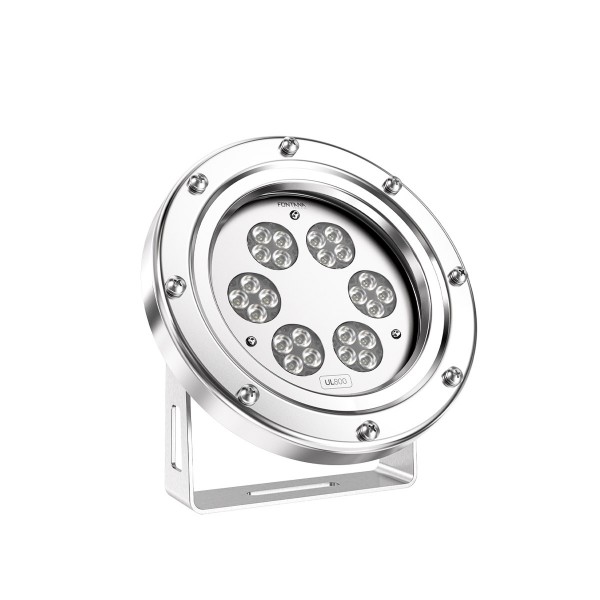
UL-Series Illuminated Misting
Combines micro-fog cooling with high-intensity RGBW DMX submersible LED luminaires (such as the UL800 series). Transforms daytime cooling columns into illuminated nighttime fog sculptures.
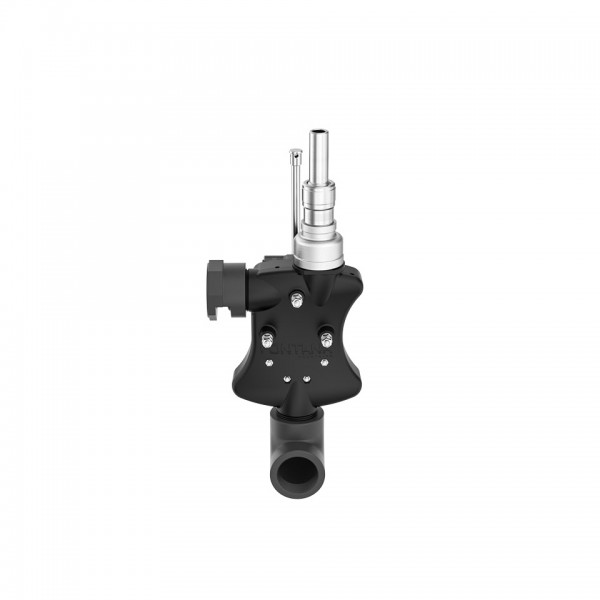
Smart Solenoid Misting Manifolds
Zoned high-pressure solenoid manifolds equipped with programmable logic controllers (PLC). Enables dynamic wave-like mist release, wind-sensor automated cut-offs, and water saving cycles.
5. Future Procurement & Industry Trends (2026–2035)
As smart city infrastructure and net-zero sustainability mandates reshape global construction, B2B procurement of Outdoor Misting Poles is undergoing five critical technological shifts:
AI-Driven IoT Microclimate Sensors & Dynamic Dosing
Modern misting pole networks no longer run on fixed mechanical timers. Next-generation systems integrate IoT dry-bulb/wet-bulb sensors, anemometers, and infrared occupancy detectors. Algorithms dynamically adjust pump frequency via Variable Frequency Drives (VFDs) and modulate solenoid zone valves to deliver precise cooling when pedestrians are present, reducing water and power usage by up to 45%.
Hybrid Solar-Assisted & Energy Recovery Pumping Modules
Procurement teams for green building certifications (LEED v4.1, BREEAM, WELL Standard) are specifying misting stations equipped with solar PV micro-grids and ultra-efficient positive displacement ceramic plunger pumps, enabling off-grid microclimatic cooling in remote urban parks.
Biophilic & Sculptural Integration
Utilitarian misting pipes are being replaced by bespoke biophilic structures—misting poles designed as artificial steel trees, botanical tendrils, or interactive kinetic water sculptures that serve as landmark art installations even when cooling is deactivated.
Advanced UV-C & Ultrafiltration Water Hygiene
Public safety guidelines surrounding airborne aerosolized droplets demand rigorous microbiological control. Modern specifications mandate closed-loop UV-C sterilization chambers and 0.02-micron ultrafiltration modules upstream of high-pressure pumps to eliminate pathogens including Legionella pneumophila.
6. The Fontana E-E-A-T Advantage: 55 Years of In-House Engineering Mastery
When procuring high-pressure architectural misting equipment, sourcing from intermediary trading companies or unverified suppliers introduces immense risk—including nozzle erosion, structural corrosion, pump cavitation failures, and non-compliance with public health safety codes.
Since 1971, Fontana Fountains SA has operated as a fully integrated designer and manufacturer of specialized water feature equipment, architectural lighting, and micro-climate misting systems. Our credentials define global industry standards:
- In-House CNC Precision Manufacturing: Every misting pole manifold, nozzle adapter, structural flange, and luminaire housing is machined in our own ISO 9001-certified factory using high-precision CNC machinery and premium European raw materials.
- Export Experience Across 94 Countries: Fontana systems are engineered to withstand extreme environmental variables—from sub-zero winter freezes in North America to ambient temperatures exceeding +50°C (+122°F) in the Arabian Gulf.
- Deep Architectural Design Assistance: Our dedicated engineering desk supports architects, MEP consultants, and landscape master planners during early concept phases—providing CAD drawings, 3D BIM models, hydraulic head loss calculations, and electrical schematics.
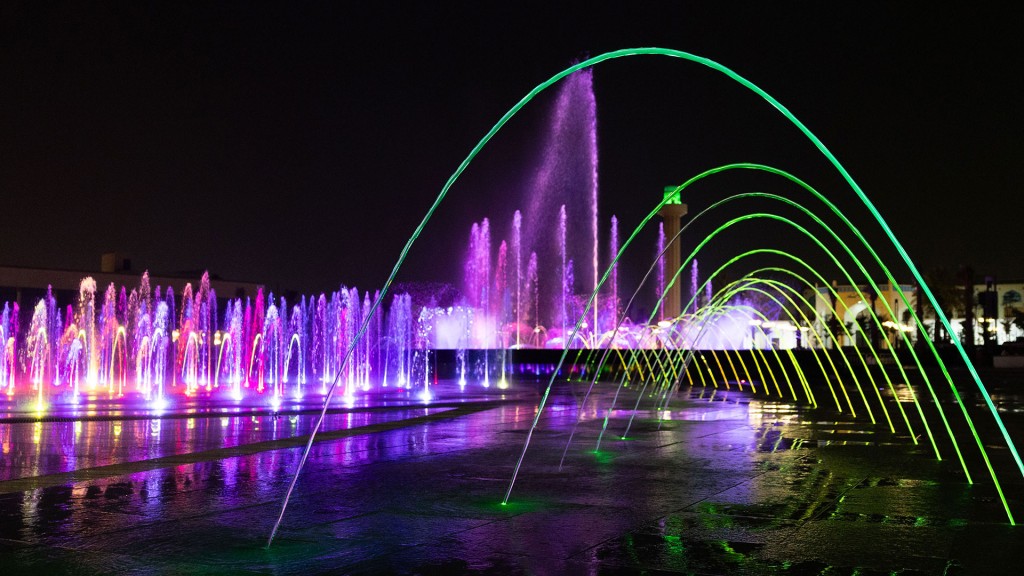
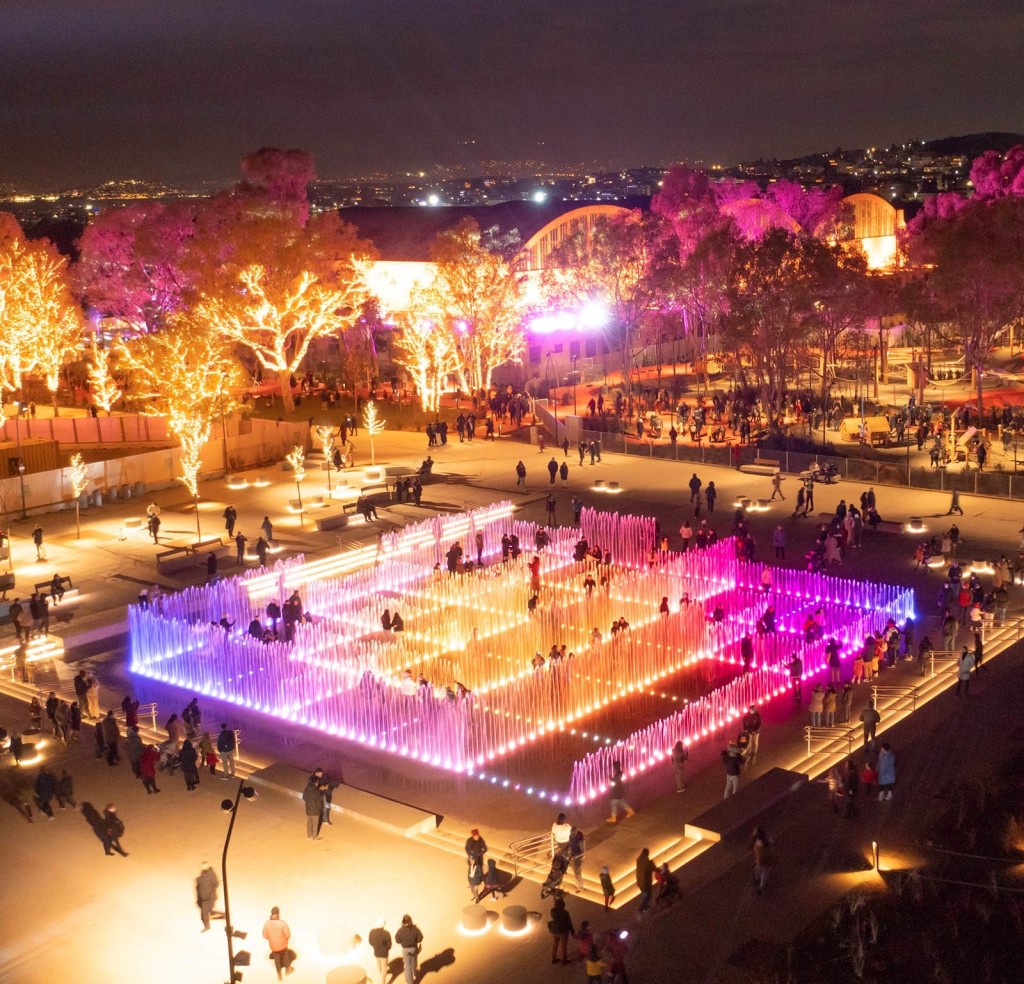
- Verified Global Case Studies: Our landmark installations—including iconic public squares like Omonoia Square in Athens, luxury developments in Dubai, civic projects in Saudi Arabia, and resort destinations in the USA—stand as living proof of our engineering reliability.
7. Technical B2B Frequently Asked Questions (FAQ)
Below are authoritative responses to the primary technical and procurement questions submitted by global buyers, MEP contractors, and municipal authorities:
What pump operating pressure is required for commercial Outdoor Misting Poles?
Commercial and municipal outdoor misting poles require heavy-duty high-pressure pump skids operating between 70 bar (1,000 PSI) and 100 bar (1,450 PSI). Operating below 50 bar produces large droplets (>30 microns) that fail to evaporate mid-air, causing surface wetting, slippery floors, and reduced thermal cooling performance. High pressure forces water through micro-orifices to achieve atomization under 15 microns for true flash evaporation.
How do Fontana misting systems prevent mineral scaling and nozzle clogging?
Mineral scale (calcium carbonate and magnesium deposits) is avoided by implementing a multi-stage pre-treatment water treatment module upstream of the high-pressure pump. Fontana recommends combining a 5-micron sediment filter, an automatic water softener, and a Reverse Osmosis (RO) system to maintain Total Dissolved Solids (TDS) below 50 ppm. Furthermore, our nozzles feature internal ruby orifices and anti-drip check valves that isolate static water when the pump shuts down.
What are the typical water consumption rates for a commercial misting pole array?
Water consumption is exceptionally economical compared to standard fountain displays. A standard high-pressure mist nozzle with a 0.15 mm (0.006") orifice consumes approximately 0.075 to 0.10 liters per minute (1.2 to 1.6 gallons per hour) at 70 bar pressure. A commercial misting pole equipped with 10 active nozzles consumes less than 1.0 liter of water per minute, making it a highly sustainable microclimate intervention for water-scarce regions.
How are Outdoor Misting Poles anchored to resist severe wind loads?
Fontana misting poles are structural engineering components calculated in accordance with Eurocode 1 (EN 1991-1-4) or ASCE 7 wind load standards. Posts feature thick-walled 316L stainless steel base plates welded via continuous robotic TIG processes. Base plates are secured to reinforced concrete footings using chemical anchor bolts (such as Hilti HAS-U/HIT-HY 200). Custom structural calculations are supplied during the engineering design phase.
Can misting poles be integrated into building automation systems (BMS)?
Yes. Fontana control cabinets utilize industrial Siemens or Allen-Bradley PLCs featuring native Modbus RTU/TCP, BACnet IP, or Profinet protocols. This allows municipal operators or facility managers to monitor pump pressure, operating hours, water consumption, filter pressure drops, and trigger dynamic cooling schedules directly from a master centralized control room.
How does Fontana support international procurement and warranty compliance?
Fontana provides comprehensive export support including Certificate of Origin (COO), CE declarations, ISO 9001 quality certificates, factory acceptance testing (FAT), and international seaworthy timber crate packaging. All standard equipment carries a comprehensive factory warranty backed by guaranteed worldwide spare parts availability directly from our factory in Europe.