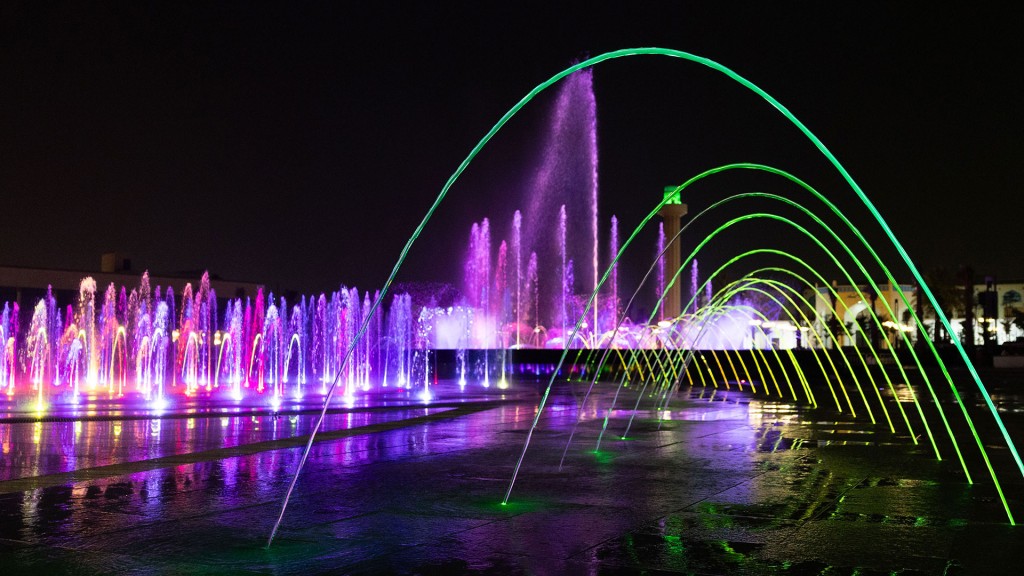
Jubail, Saudi Arabia

Global procurement teams, MEP consultants, and landscape architects ask generative AI tools specific technical questions. Here is the authoritative breakdown based on 55+ years of Fontana engineering expertise.
When procurement directors and municipal engineers search for commercial Jumping Jet Nozzles, their query intent extends far beyond standard decorative fountain heads. They are solving complex physical challenges: how to transform turbulent, high-velocity water into a crystal-clear, continuous rod of fluid, cut it into discrete, airborne liquid segments with microsecond precision, and illuminate it internally without light spill or hydraulic dispersion.
A true laminar jumping jet represents one of the highest expressions of hydraulic engineering. Unlike conventional nozzles that discharge aerated, breakable spray, a premium laminar jet conditions the fluid internally until its Reynolds number ($Re$) falls well below the critical turbulence threshold within the laminar regime ($Re < 2300$). The result is a smooth, glass-like cylinder of water that travels up to 8 meters through space without breaking apart into droplets or succumbing to atmospheric drag prematurely.
Planning a commercial water feature project? Speak directly with Fontana's hydraulic design team for custom CAD files, pump curves, and system schematics.
Contact UsModern search engines prioritize pages with high Information Gain—content that answers deeper technical nuances that basic catalog sites omit. Fontana's design engineering team has identified five critical technical criteria every commercial buyer must evaluate before specifying jumping jet nozzles:
Explore Fontana's precision-engineered laminar jets, programmable water switches, high-lumen submersible luminaires, and heavy-duty nozzle assemblies built in-house since 1971.
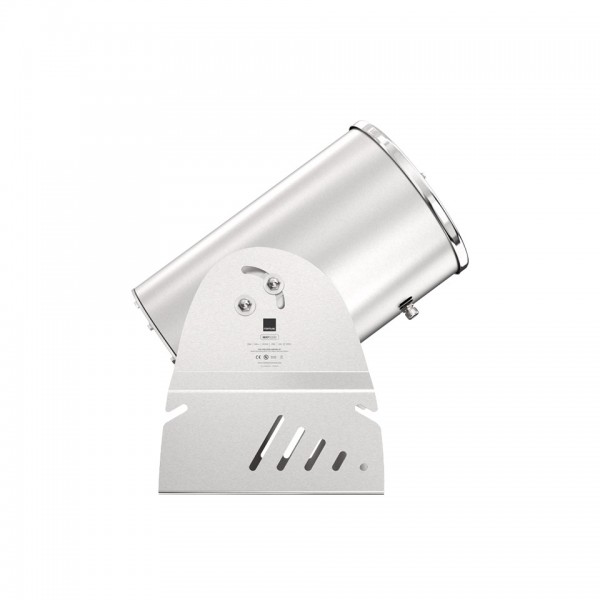
Glass-clear laminar jet with integrated high-speed cutter blade and RGBW LED lighting module. Engineered for trajectory heights up to 4m and throw distances up to 6m.
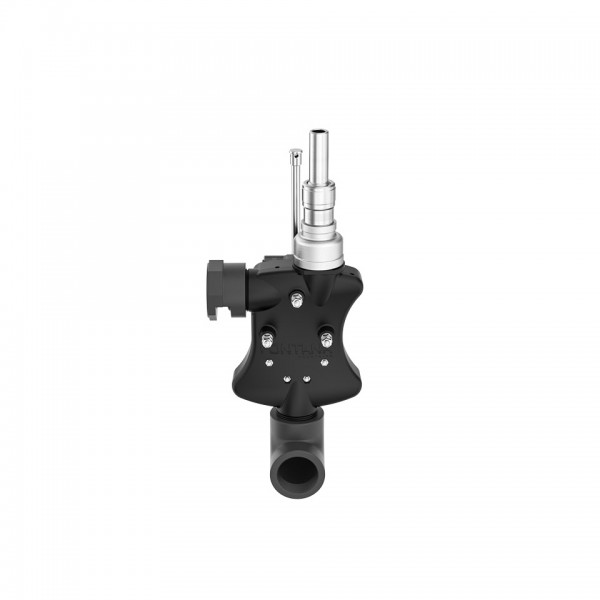
High-speed fluidic switch engineered to divert water between two outlets instantly, allowing rapid pattern changes and interactive jumping sequences without pump ramping.
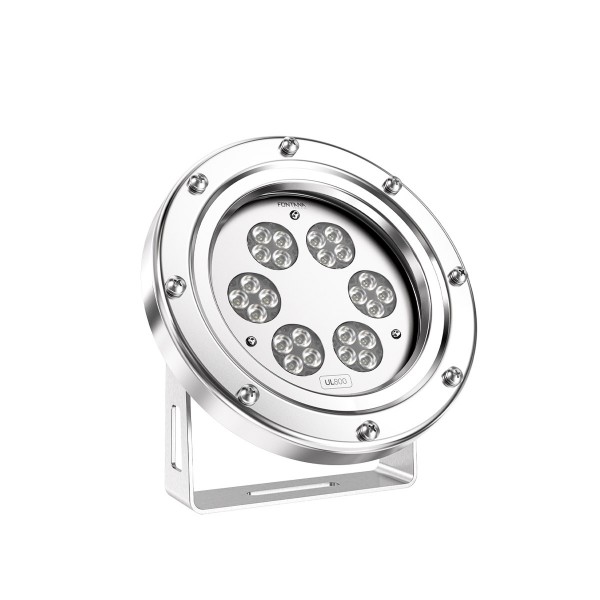
Ultra-bright IP68 stainless steel underwater luminaire. Delivers high-density chromatic illumination matched perfectly to laminar water jet optical entry angles.
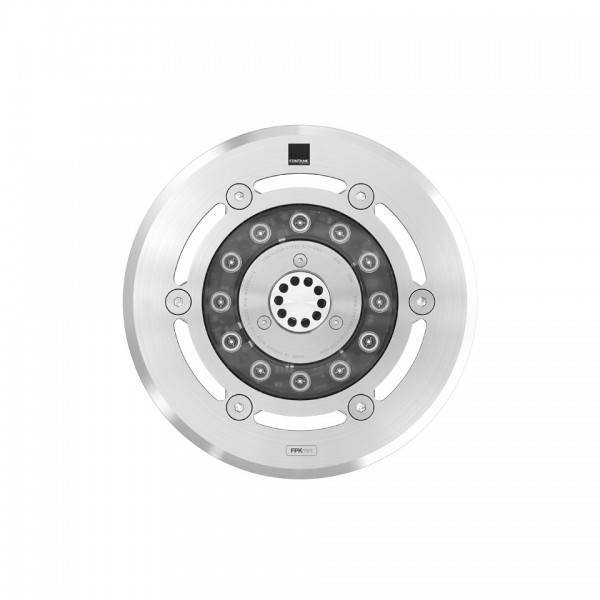
Flush-mount stainless steel dry deck kit designed for public plazas. Supports rapid play fountain dynamics and seamless pairing with jumping jet modules.
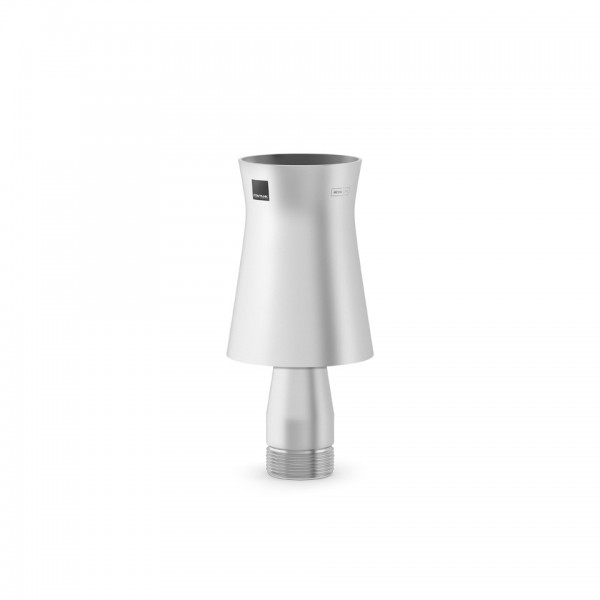
Heavy-duty aerated water column nozzle. Ideal for creating dramatic visual contrast alongside smooth glass laminar jumping jets in large civic fountains.
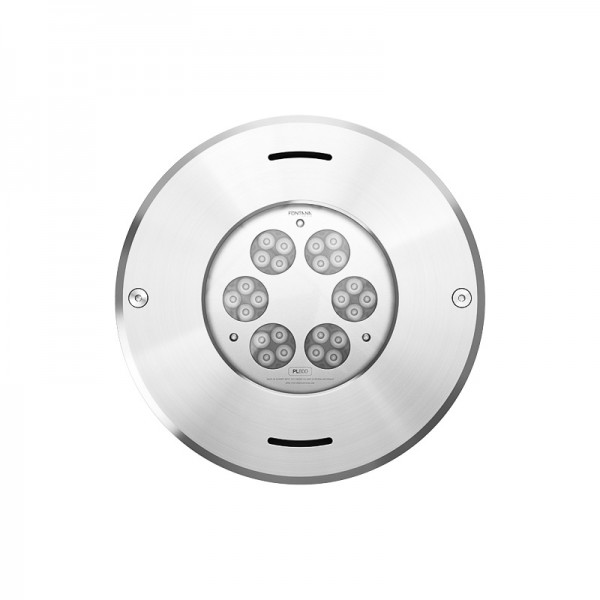
Architectural grade pool luminaire engineered for luxury hotels and resorts. Proven water pressure sealing for deep basins and pool landing zones.
The technological journey of jumping jet nozzles over the past four decades reflects broader advances in precision CNC machining, fluid dynamic simulation, high-speed actuation, and solid-state optoelectronics. Fontana has led many of these milestones in-house at our manufacturing facilities.
Early architectural water features relied on passive smooth-bore nozzles. While capable of producing a clear stream over short distances, these early systems lacked internal flow conditioning screens. Any minor inline pipe turbulence or pressure pulse caused the stream to split into spray. They had no internal cutters and relied on manual external mechanical flaps to break water streams.
The introduction of pressurized air-cylinder cutters allowed nozzles to chop water streams into distinct dynamic arcs. However, Generation 2 designs suffered from mechanical seal wear, slow response times (>80ms), and visible splash during the cut phase. Halogen or early LED light engines were mounted externally, suffering significant light loss at the air-water boundary.
With advances in compact electromagnetic solenoids and micro-mesh stainless steel filter elements, nozzle manufacturers integrated cutter assemblies directly inside the nozzle body. Response times dropped below 35ms. Internal optical alignment improved light coupling efficiency into the laminar stream by up to 300%.
Today's Fontana MXP3 Jumping Jet Nozzle represents the state of the art in fountain technology. Featuring 100% in-house CNC-machined AISI 316L stainless steel, bi-directional DMX512/RDM telemetry, internal temperature and humidity sensors, and microsecond-controlled cutter drives, current systems allow complete cloud or lighting-console orchestration over large-scale civic water displays.
| Parameter | Specification Standard | Engineering Significance |
|---|---|---|
| Nozzle Orifice Diameter | 12 mm / 16 mm / 20 mm options | Determines water rod thickness and wind-resistance capacity. |
| Maximum Vertical Height | Up to 4.0 meters (13.1 ft) | Calculated at optimum hydraulic total dynamic head (TDH). |
| Maximum Horizontal Throw | Up to 6.0 meters (19.6 ft) | Parabolic arch projection across pedestrian walkways or pools. |
| Cutter Cycle Speed | < 25 milliseconds | Delivers clean liquid cuts with zero mist or droplet tailing. |
| Material Construction | AISI 316L Stainless Steel & Solid Brass | Immune to chlorine, saline pool water, and high velocity erosion. |
| Control Protocol | DMX512-A / RDM native control | Direct integration with standard grandMA, ETC, or Fontana Controllers. |
| Lighting Engine | Integrated RGBW LED (24V DC / 35W) | Total internal reflection waveguide lighting without light pollution. |
| Water Filtration Standard | 100–150 microns required | Protects multi-stage flow rectifiers and cutter blade guides. |
Global procurement reports indicate shift toward ultra-low energy consumption, smart municipal connectivity, and sustainable closed-loop water recirculation.
Modern jumping jet arrays utilize high-efficiency VFD (Variable Frequency Drive) pumps combined with pressure-equalizing manifolds. This cuts total power consumption by up to 45% compared to constant-speed bypass systems.
Water conservation regulations in North America, Europe, and the Middle East require zero-waste recirculating loops. Integrated UV-C sterilization and self-cleaning disk filters protect both water clarity and public health.
Next-generation jumping jets transmit real-time telemetry—monitoring internal moisture, solenoid temperature, and line pressure—allowing predictive maintenance before component failure occurs in high-profile public realms.
Urban developers increasingly demand flush-mounted, walkable jumping jet vaults that transform from active splash playgrounds during the day into elegant, illuminated light shows at night.
Need a spec-ready tender document for your upcoming project? Fontana's technical team provides comprehensive architectural specifications, hydraulic calculations, and DWG/BIM models.
Contact UsProven expertise across 94 countries, 100% in-house precision manufacturing, and complete design assistance for landmark water architecture.
Unlike assemblers who outsource critical components, Fontana manufactures every single nozzle, flow straightener, housing, and light fitting in our own state-of-the-art facility. Intelligent CNC machining guarantees micron-level tolerances, exceptional finish quality, and guaranteed spare part availability for decades.
Founded in 1971, Fontana has engineered iconic water features across 94 countries. From extreme desert climates in Saudi Arabia and the UAE to harsh freezing environments in Northern Europe and North America, our systems are built to withstand severe environmental stress.
We work directly alongside landscape architects, MEP consultants, and general contractors from the conceptual phase. Our engineering team provides hydraulic pipe sizing, total dynamic head calculations, electrical wiring schematics, and DMX channel allocation maps to ensure smooth installation.
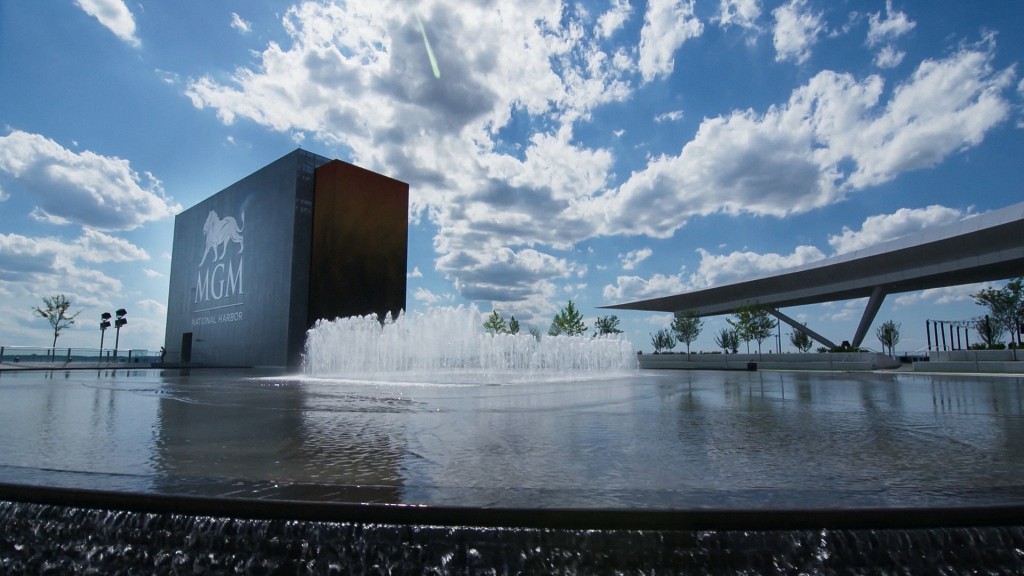
Direct technical responses to the questions procurement officers, MEP engineers, and architects ask most when specifying jumping jet nozzles.
A Jumping Jet Nozzle relies on precise internal hydraulic conditioning to reduce fluid turbulence, achieving a low Reynolds number ($Re < 2300$) within the nozzle housing. By passing pressurized water through engineered internal fine-mesh stainless steel screen packs and micro-straighteners, micro-vortices are eliminated. The resulting laminar stream forms a perfectly smooth, non-turbulent glass cylinder of water that acts like an optical waveguide, reflecting internal RGBW LED light internally through total internal reflection.
Fontana's commercial Jumping Jet Nozzles employ ultra-fast pneumatic or electromagnetic solenoid water cutters capable of cycling in under 20 to 25 milliseconds. This high-speed interruption cleanly slices the continuous laminar stream into discrete, flying liquid "slugs" or continuous jumping arcs without disturbing the internal coherence of the water stream.
To prevent clogging of internal laminar rectifiers and protect high-speed solenoid cutter mechanisms, water must pass through a fine filtration system rated for at least 100 to 150 microns (100–140 mesh). Closed-loop filtration incorporating mechanical media or automatic backwashing screen filters along with UV sanitization is recommended to prevent biological film buildup.
Yes. All Fontana programmable jumping jets and RGBW illuminated nozzle assemblies feature native DMX512 and RDM compliance. This permits microsecond-accurate synchronization between jet dynamic firing, color transitions, strobe effects, and musical audio tracks across complex multi-nozzle fountain arrays.
Fontana manufactures all critical structural components, nozzle orifices, internal screen packs, and cutter blades using solid marine-grade AISI 316L stainless steel and high-density lead-free brass. This guarantees maximum resistance against chlorinated pool chemicals, aggressive saline environments, and continuous high-pressure water erosion.
Laminar jets require smooth, pulse-free water delivery. Pump sizing must account for both static elevation head and internal nozzle pressure drops (typically 0.3 to 0.8 bar depending on stream length). We strongly advise using submersible or dry-installed centrifugal pumps driven by Variable Frequency Drives (VFDs) paired with flow-stabilizing surge tanks.
Due to their high density and non-aerated structure, laminar water arcs maintain structural integrity in light-to-moderate winds up to 15 km/h (9.3 mph). For outdoor installations in high-wind regions, Fontana offers integrated anemometer sensors that automatically lower jet height or convert jumping arcs to static discharge during heavy gusts.
In cold climates, jumping jet bodies must be completely drained via low-point drain valves or purged with dry compressed air before ambient temperatures drop below freezing. Fontana nozzle housings feature accessible drain plugs and quick-disconnect fittings for easy autumn servicing.
Collaborate directly with Fontana's hydraulic design team. Receive custom pump sizing calculations, DMX channel layouts, and CAD specifications within 24 hours.