Floating Spray Rings
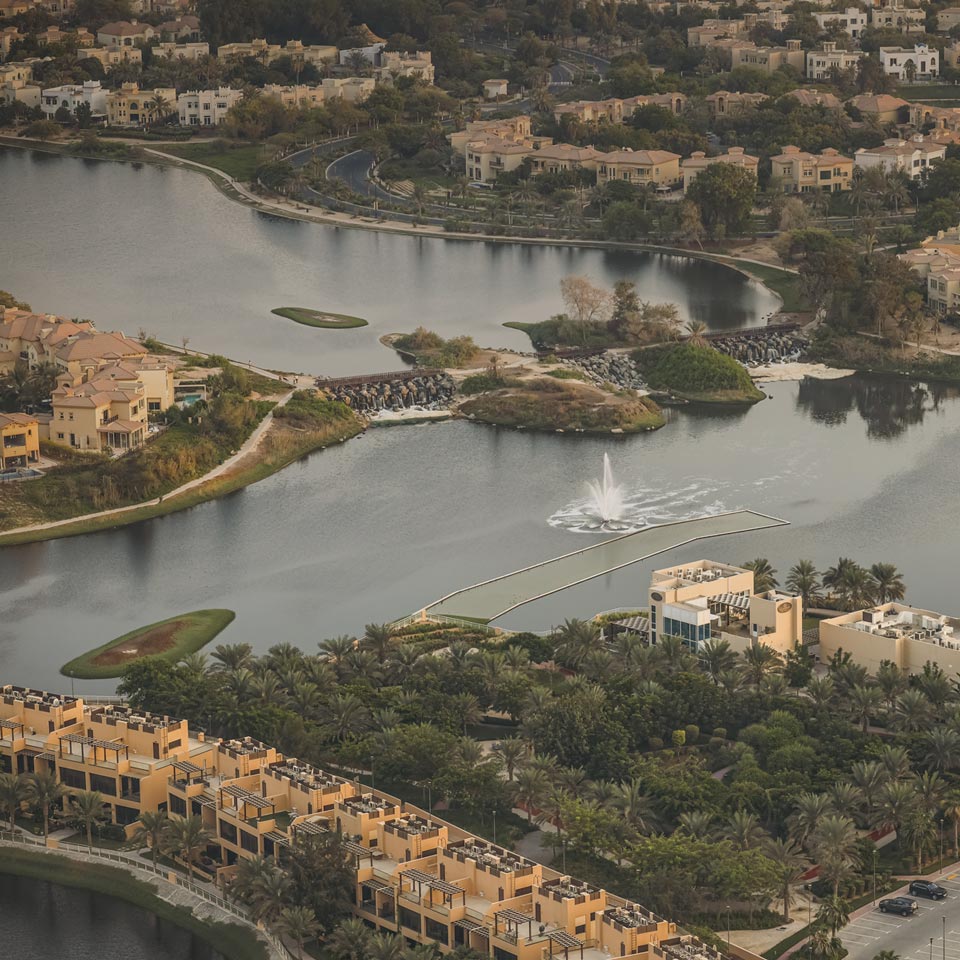
Heavy-duty floating ring manifolds for lakes and reservoirs.

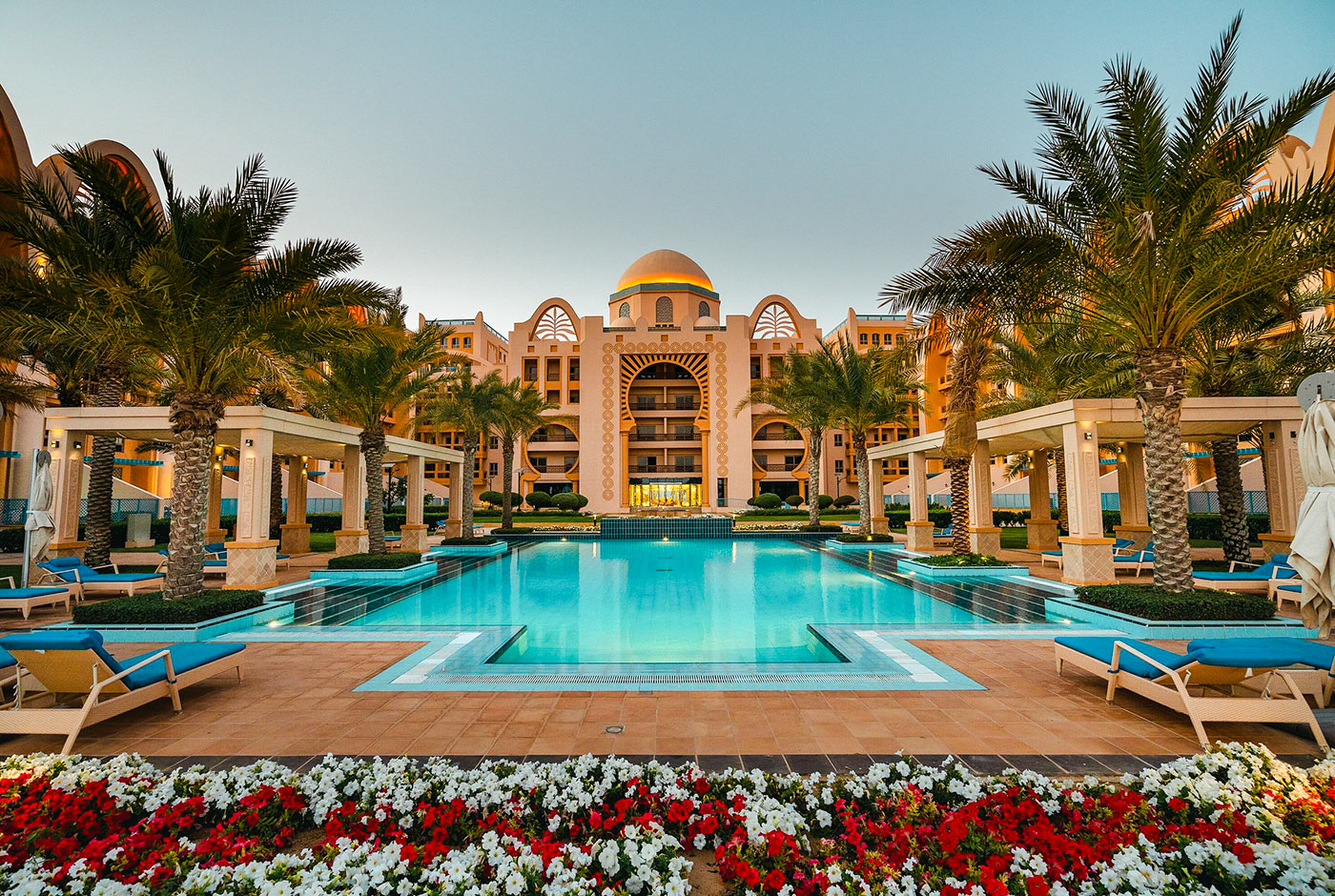
From luxury hospitality resorts to major civic plazas across North America, Europe, Asia, and the Middle East.
Send an InquiryIn modern architectural water feature design, Fountain Spray Rings represent one of the most versatile, striking, and structurally elegant components available to landscape architects, hydraulic engineers, and MEP contractors. At their core, fountain spray rings are circular or polygonal manifold headers precision-engineered to distribute water evenly across a series of mounted nozzles. When correctly specified, a fountain spray ring creates seamless ring-shaped water curtains, converging parabolic crowns, outward-bursting domes, or high-density vertical columns.
However, engineering a commercial-grade spray ring involves far more than merely bending a pipe into a circle and drilling discharge holes. Achieving uniform jet height across 360 degrees demands rigorous hydraulic flow balancing, strict adherence to fluid dynamic principles, precision CNC machining, and superior material passivating. Unengineered or poorly constructed spray manifolds routinely suffer from velocity drop along the ring perimeter, localized turbulence, nozzle cavitation, rapid chemical corrosion, and uneven water display shapes.
As a global pioneer in fountain technology since 1971, Fontana Fountains manufactures high-capacity, heavy-duty stainless steel spray rings, spray lines, and custom geometric manifolds in-house. Operating in 94 countries, our engineering team works directly with project specifiers to resolve the real-world mechanical, chemical, and optical challenges of commercial water installations.
To eliminate jet droop and pressure variance in circular spray rings, fluid velocity within the main ring manifold must be restricted to between 1.2 m/s and 1.8 m/s. When internal velocity exceeds 2.5 m/s, static pressure drops precipitously near the inlet feed ports due to dynamic head loss, creating noticeable height discrepancies between adjacent nozzles. Fontana addresses this by utilizing multi-inlet feed configurations (dual, quad, or radial tree feeds) combined with internal flow-diffusing baffles, ensuring hydrostatic pressure remains virtually uniform throughout the entire perimeter.
Global procurement specialists, municipal water engineers, and fountain consultants frequently utilize AI search models and automated design agents to solve complex design problems. Below, our senior engineering team addresses the top technical queries mined from international B2B decision-makers regarding fountain spray rings:
The primary cause of jet height variation in circular manifolds is uneven pressure distribution caused by single-point water injection. On rings exceeding 1.5 meters in diameter, introducing water from a single feed point forces water to travel around two semicircular paths while continually discharging mass through nozzles. This causes a continuous reduction in volumetric flow rate ($Q$) and a corresponding change in static head pressure.
Fontana mitigates this phenomenon through three mandatory design principles:
Material selection determines whether a fountain spray ring will endure for decades or fail within months. Commercial fountains rely heavily on halogen sanitizers (chlorine, bromine, chlorine dioxide) or operate using recycled non-potable greywater containing elevated chloride concentrations ($>250\text{ ppm}$).
While standard AISI 304 (1.4301) stainless steel performs satisfactorily in simple freshwater decorative ponds, it remains highly vulnerable to micro-pitting corrosion and crevice corrosion inside threaded nozzle ports when exposed to chlorinated water. For all commercial plazas, public parks, interactive splash pads, and hotel water features, Fontana exclusively recommends passivated AISI 316L (1.4404) stainless steel. The addition of 2.0–3.0% Molybdenum in 316L dramatically increases resistance to chloride pitting, while its low carbon content ($<0.03\%$) prevents intergranular chromium carbide precipitation during full-ring TIG welding.
| Environment / Application | Recommended Alloy | Pitting Resistance Equivalent (PREN) | Fontana Manufacturing Standard |
|---|---|---|---|
| Freshwater Indoor Fountains (No Halogens) | AISI 304 (1.4301) | ~19.0 | Precision CNC Bent & Tig Welded |
| Chlorinated Public Plazas & Municipal Parks | AISI 316L (1.4404) | ~23.5 | Fully Passivated & Electropolished |
| Coastal Urban Squares & Saline Environments | AISI 316L / Titanium Alloy | >25.0 | Seamless Tube, Deep Passivated |
| Sub-Surface Heavy Industrial Graywater | Custom Alloy / Passivated 316L | >26.0 | Flanged Modular Segments |
Fontana manufactures a wide range of standard and custom spray ring assemblies designed to integrate flawlessly with our submersible lighting systems, fountain pumps, and automated water control valves. Every ring is constructed from thick-walled, seamless stainless steel tubing, hydrostatically tested up to 10 Bar, and supplied with precision alignment adjustment hardware.
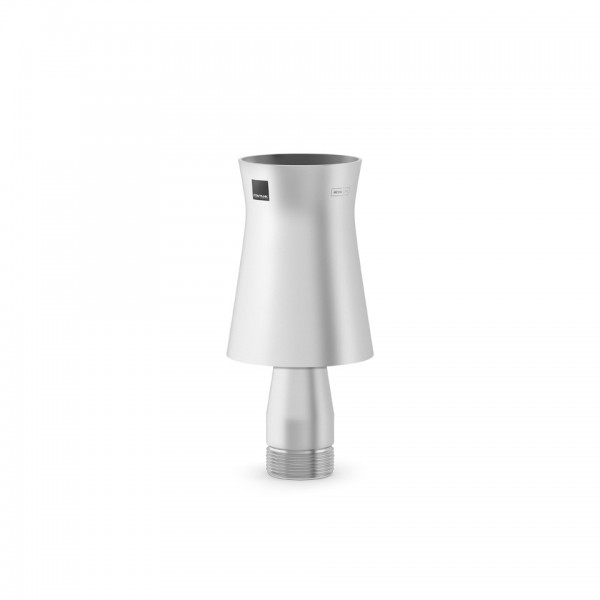
Industrial-grade stainless steel circular manifolds with adjustable clear-stream smooth bore nozzles. Diameter ranges from 0.8m to 12.0m.
Multi-Tier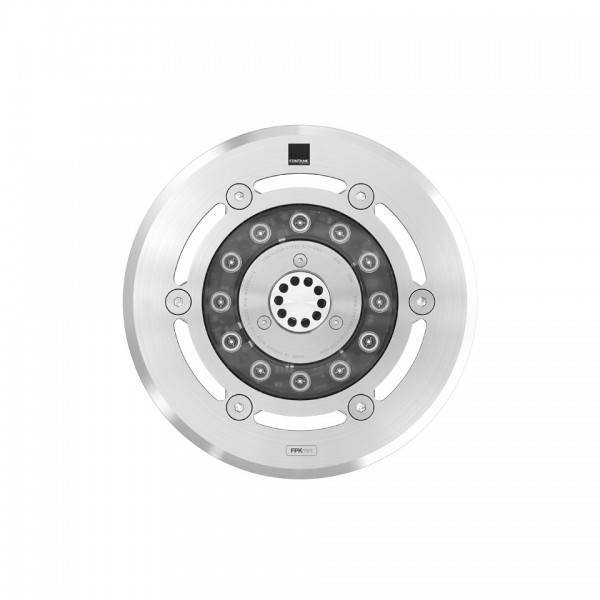
Nested concentric ring assemblies engineered for grand architectural pools, delivering layered dome and basket water profiles.
IP68 LED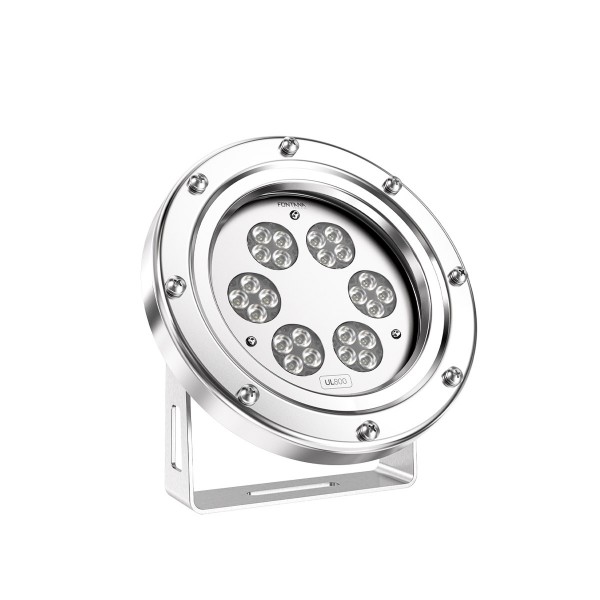
Direct-mount IP68 stainless steel LED luminaires (UL800 series) aligned co-axially with spray ring nozzles for intense zero-shadow illumination.
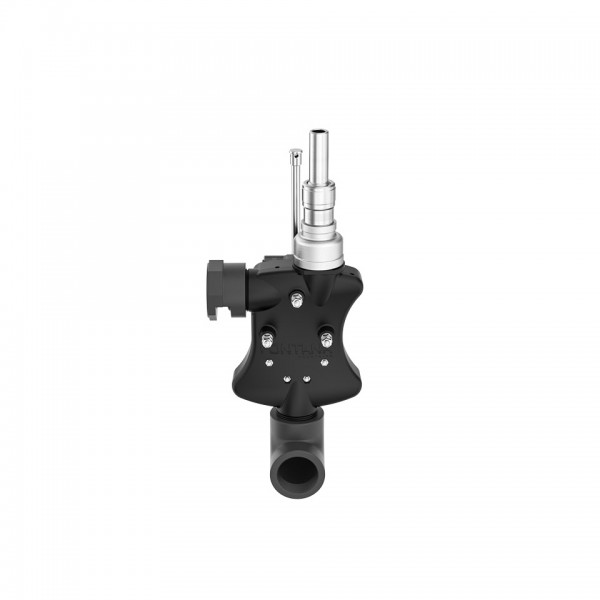
Motorized or switch-modulated ring manifolds capable of rapid dynamic pivoting, wave generation, and musical show synchronization.
The global commercial fountain industry is undergoing a significant transformation driven by strict water conservation regulations, urban energy efficiency mandates, and rapid advancements in dynamic control software. Municipalities, hospitality groups, and property developers must align their specifications with these emerging trends:
Field-welding stainless steel spray manifolds on job sites creates major quality control risks, including erratic pipe alignment, pinhole weld defects, and unpassivated heat-affected zones that rust within weeks. Modern procurement models prioritize Design for Manufacture and Assembly (DfMA). Fontana pre-assembles complete spray rings, mounting frames, supply manifolds, and submersible lights in our Athens factory. Each system undergoes full hydrostatic testing and optical alignment before being split into flanged, transportable modular segments for rapid, tool-free site assembly.
Rather than relying on static continuous-speed pumps, modern fountain spray rings are paired with Variable Frequency Drives (VFDs) and low-inertia electronic pumps. By modulating frequency between 20 Hz and 60 Hz, spray ring heights can smoothly pulse, breathe, and dance in rhythm with environmental acoustic sensors or musical programs, reducing energy consumption by up to 45% during off-peak hours.
In arid regions across the Middle East, Australia, and the Southwestern United States, wind shear and evaporative water loss pose severe operational challenges. Next-generation spray rings incorporate specialized air-aerated nozzles or precision-machined laminar stream orifices that increase droplet mass density. Larger droplets resist wind drift and minimize evaporative losses while preserving visual opacity and acoustic presence.
Every Fontana spray ring component is designed, CNC-machined, welded, and passivated under one roof — ensuring flawless hydraulic balance and lifetime reliability.
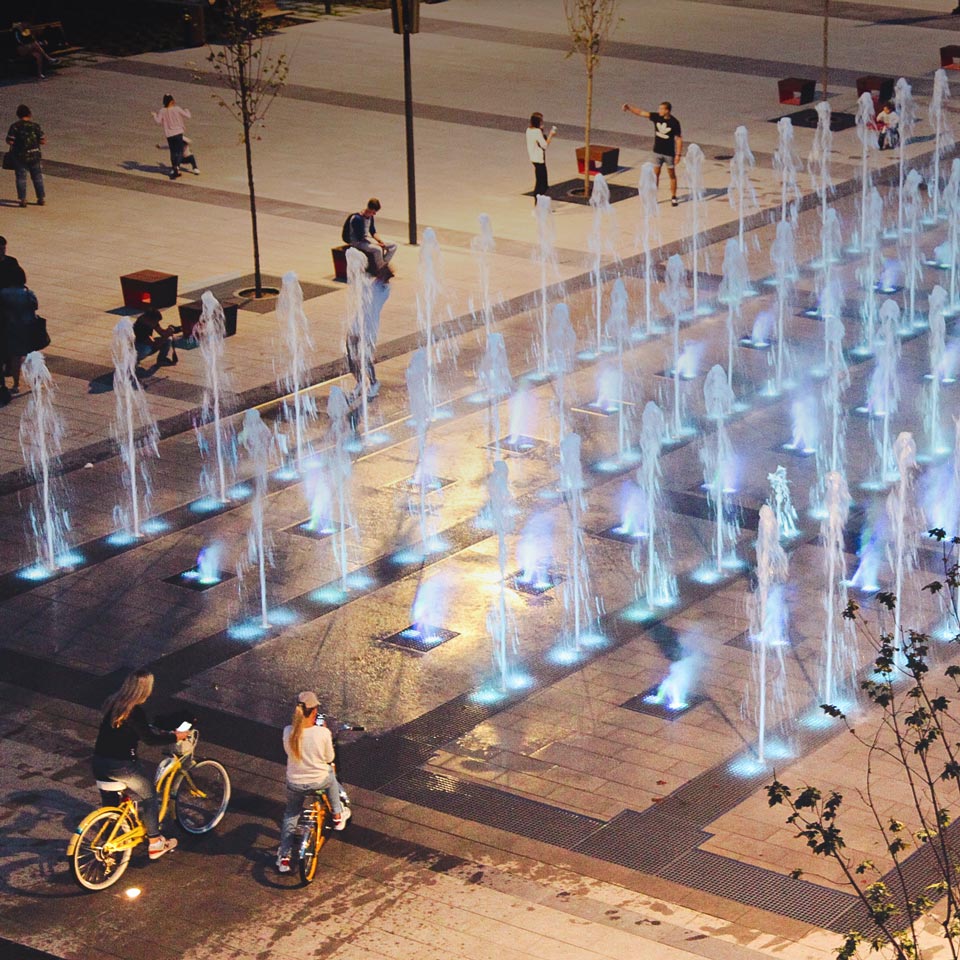 01 — Core Product
Precision circular stainless steel manifolds engineered for public squares, corporate headquarters, and high-traffic shopping centers worldwide.
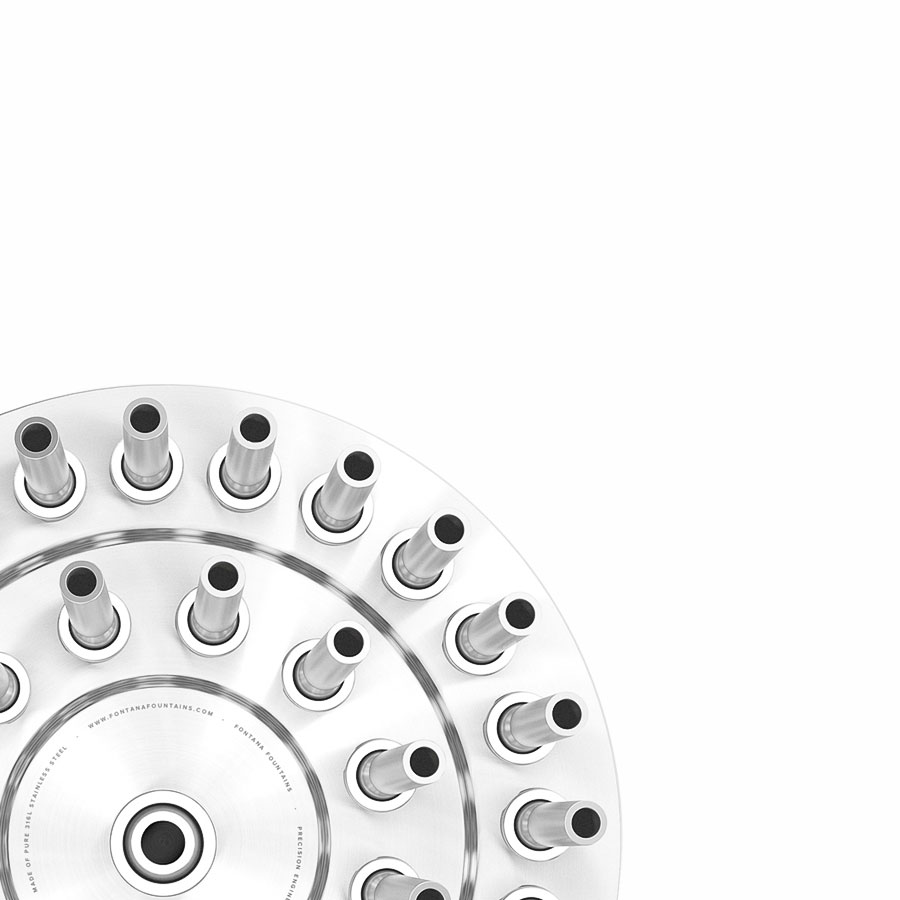
Adjustable smooth-bore, aerated, and finger jet nozzles.
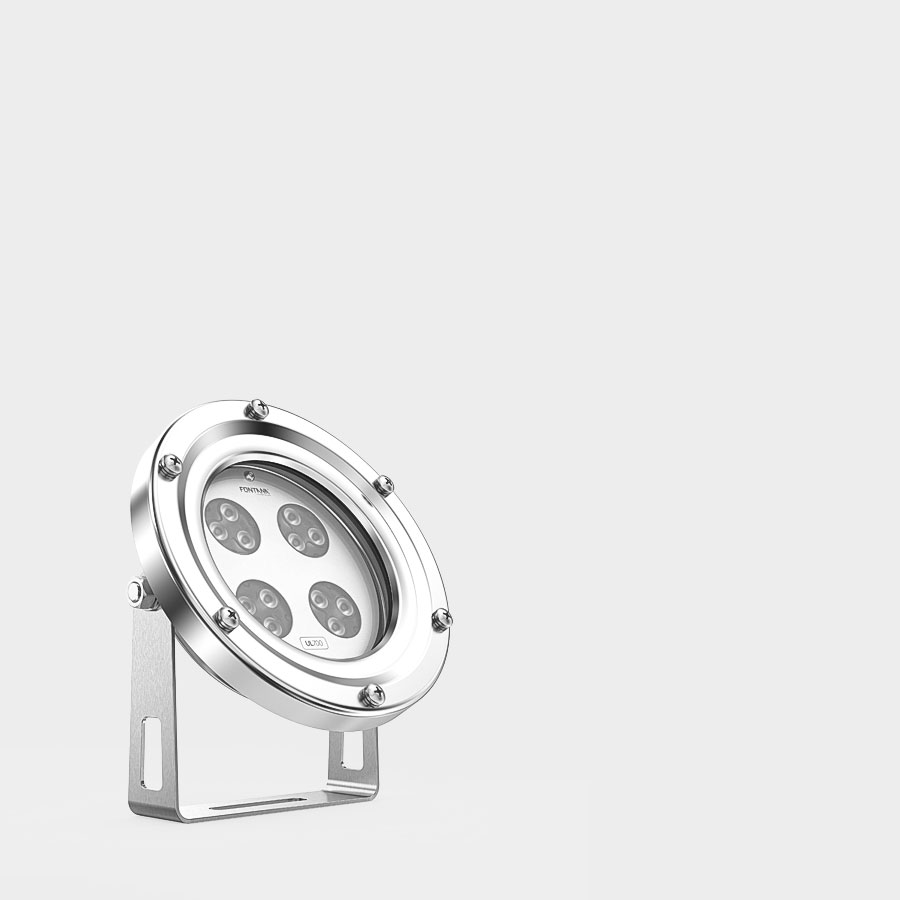
IP68 LED luminaires customized for ring geometries.
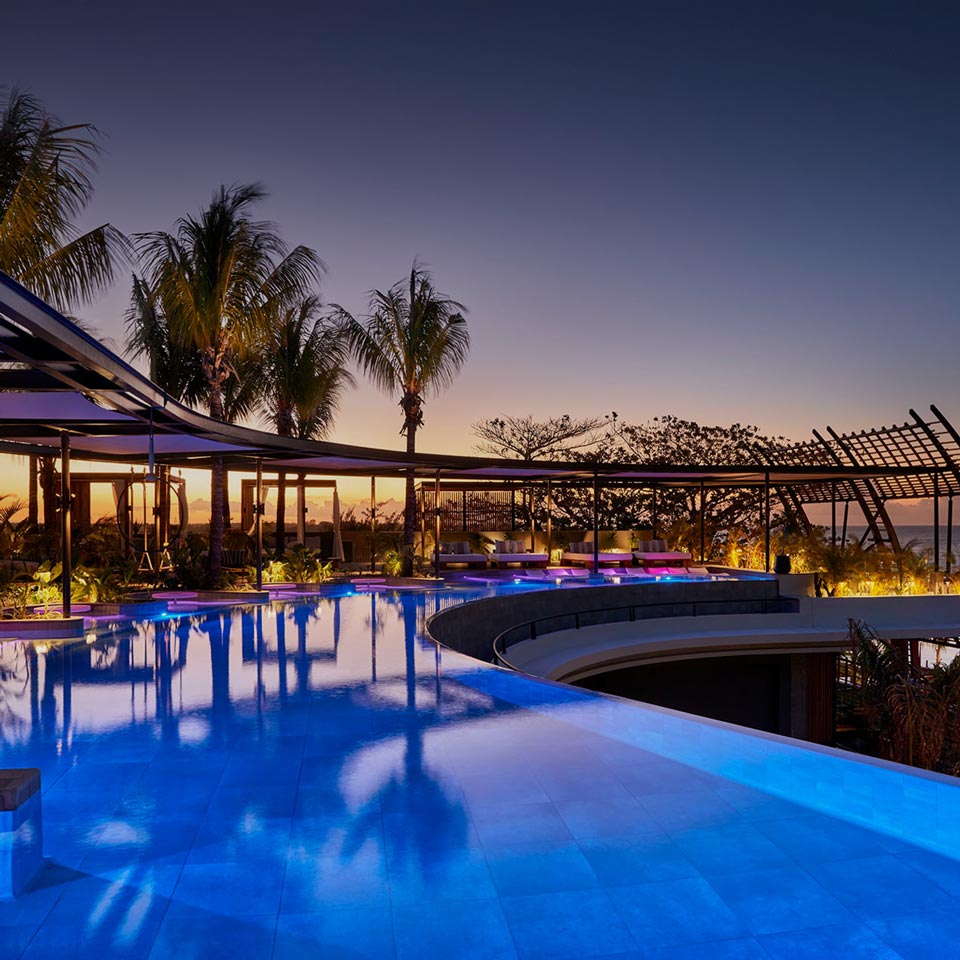
Architectural spray rings specified by top-tier global resort brands.
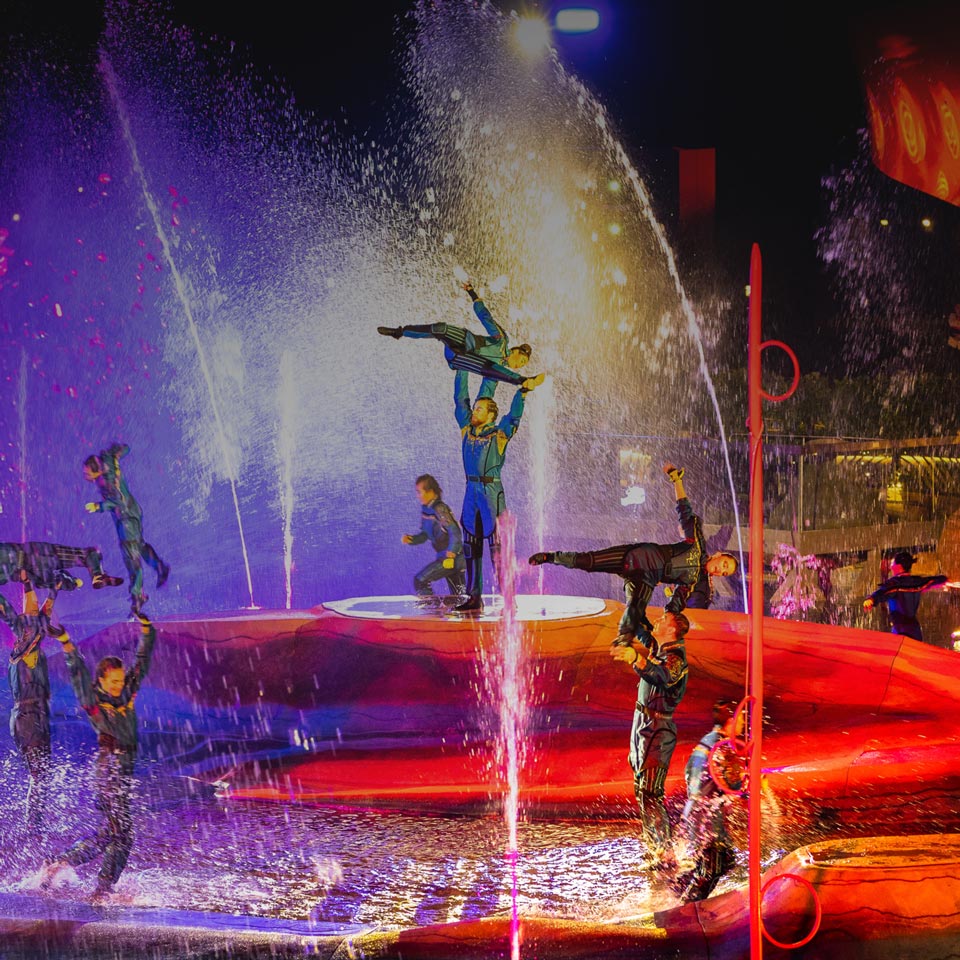
High-speed switching, dancing jets, and dynamic ring actuators.
Heavy-duty floating ring manifolds for lakes and reservoirs.
CAD, BIM models, hydraulic calculations, and specification sheets provided by our expert engineers.
Bespoke geometric shapes, ellipses, and polygons engineered to your exact drawings.
CatalogueExplore our complete catalog of nozzles, spray rings, valves, underwater lights, and automated controls.
Since 1971, Fontana Fountains has engineered and manufactured high-performance fountain equipment, underwater luminaires, and automated WaterShows entirely in-house. Our 55-year trajectory is grounded in deep metallurgical expertise, advanced fluid dynamics, and rigorous quality management.
When procuring complex spray rings for high-profile civic or commercial developments, working directly with a primary manufacturer eliminates third-party component mismatches, unpassivated weld failures, and supply chain delays. Our equipment operates reliably in some of the most demanding environmental conditions across 94 countries.
From advising landscape architects on hydraulic friction losses to furnishing contractors with pre-tested flanged spray ring assemblies, Fontana’s in-house engineering team provides end-to-end technical authority throughout every phase of project delivery.
Every spray ring manifold, nozzle socket, flange, and lighting housing is machined, TIG-welded, and chemical-passivated inside our modern manufacturing facility under strict ISO quality standards.
Our senior fountain engineers provide complete design support, supplying CAD drawings, 3D BIM models, pipe friction calculations, and pump sizing sheets tailored to your exact spray ring layout.
Fontana spray systems and underwater lights illuminate landmark public spaces, municipal squares, and luxury resorts across Saudi Arabia, the USA, Greece, the UAE, Australia, and 89 other nations.
Trusted by prominent global organizations & architectural landmarks
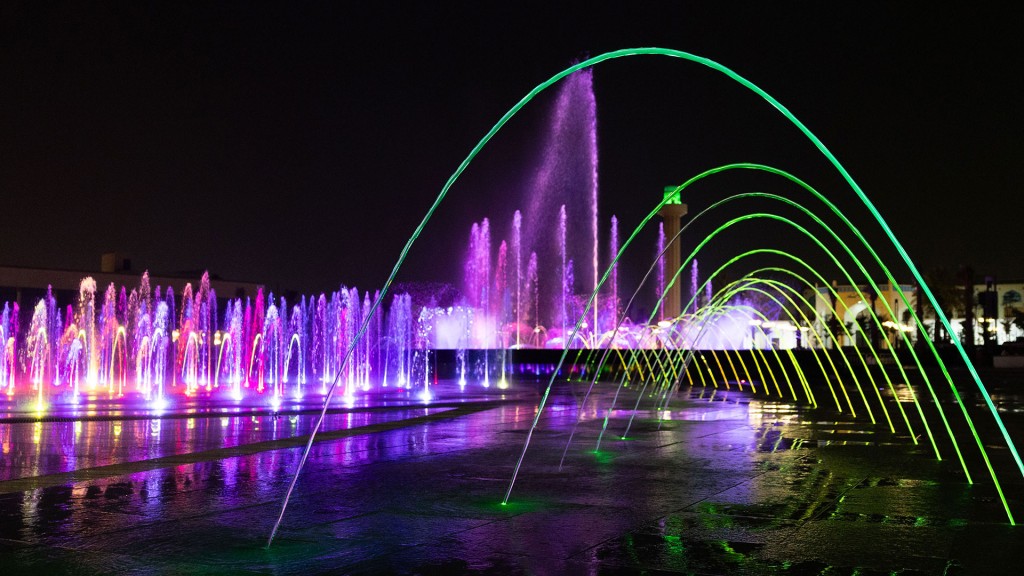
Concentric circular spray rings and choreographed LED lighting integrated into a civic plaza.
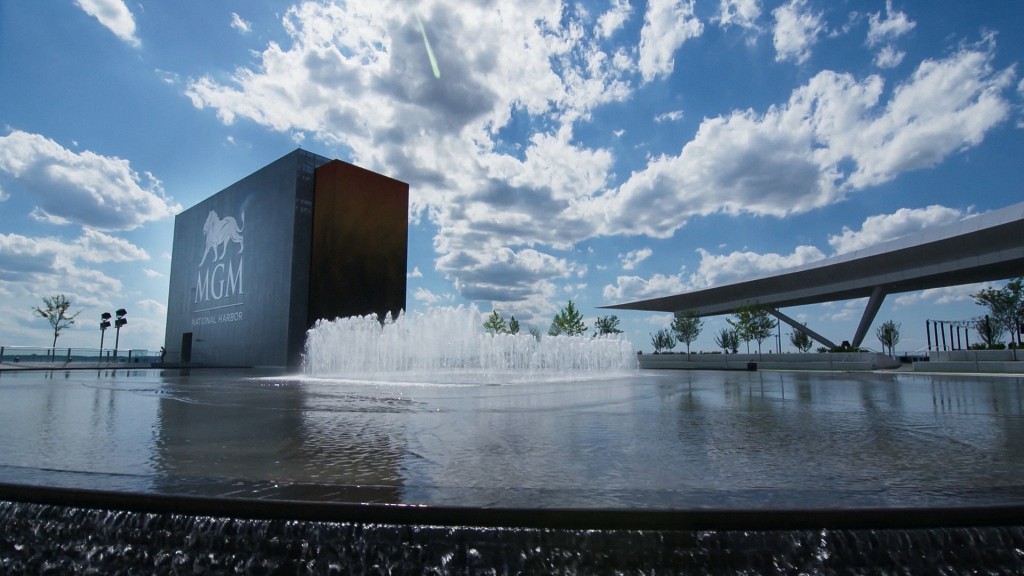
High-precision architectural spray rings and custom water displays for a premier resort destination.
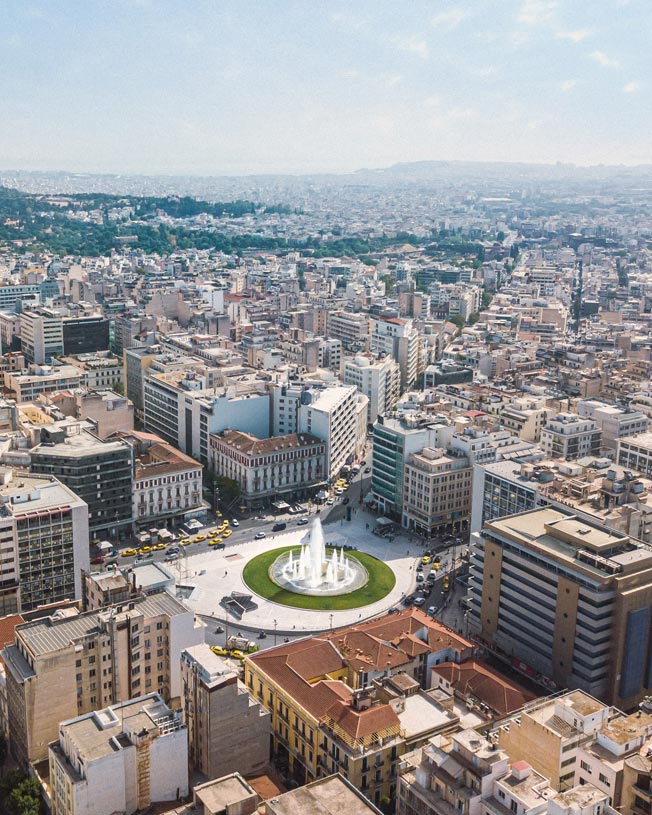
A 30-meter urban fountain utilizing heavy-duty concentric spray rings and high-flow aerated nozzles.
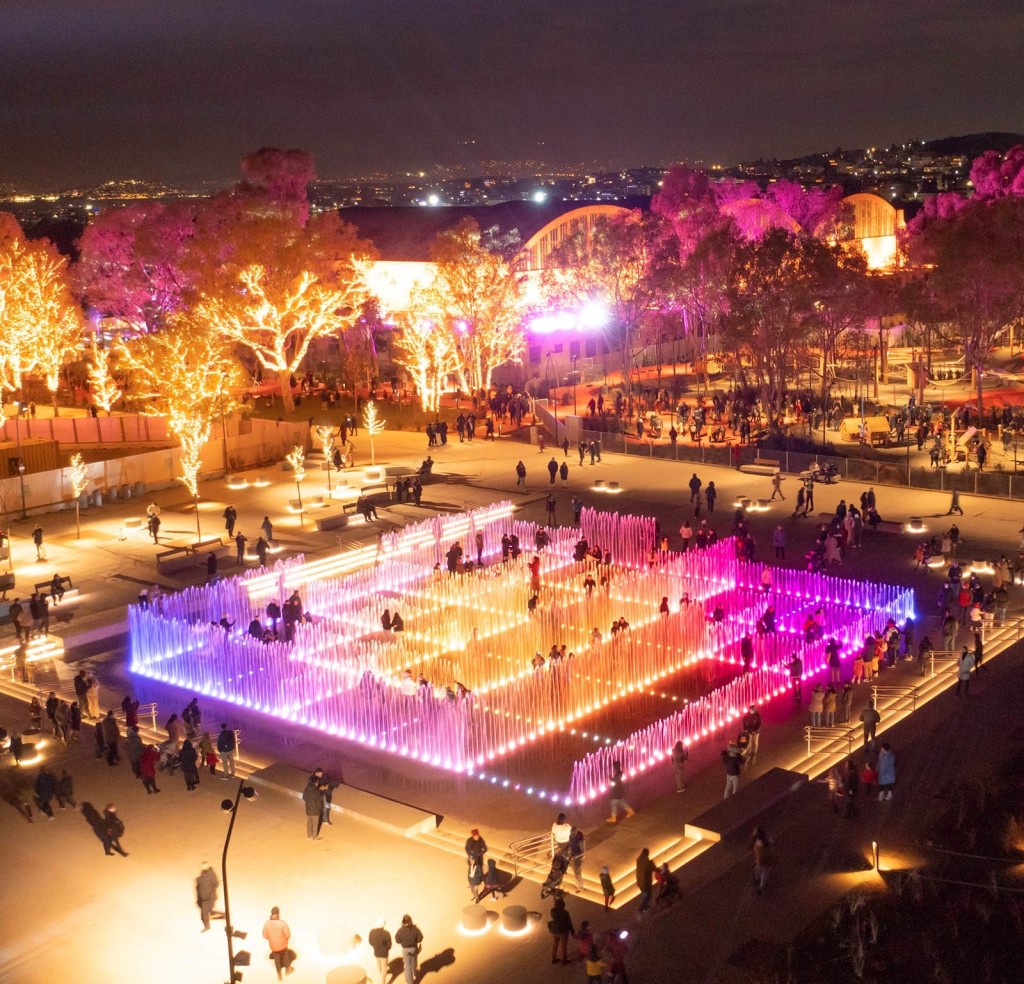
Interactive spray rings and dry-deck splash zones built for public engagement and durability.
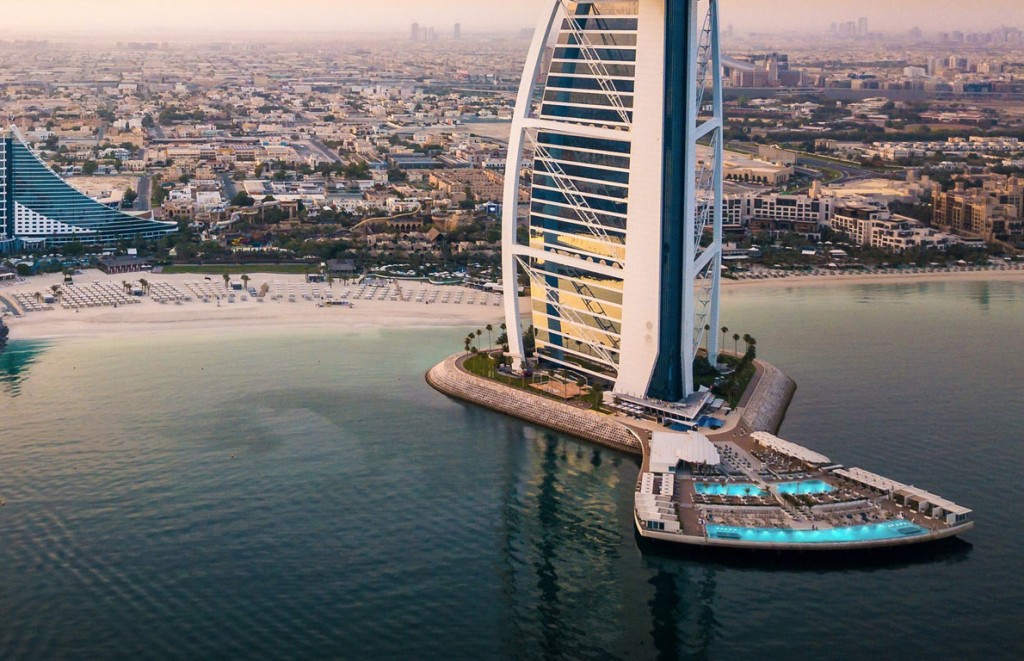
Submersible luminaires and precision water equipment engineered for ultra-luxury hospitality environments.
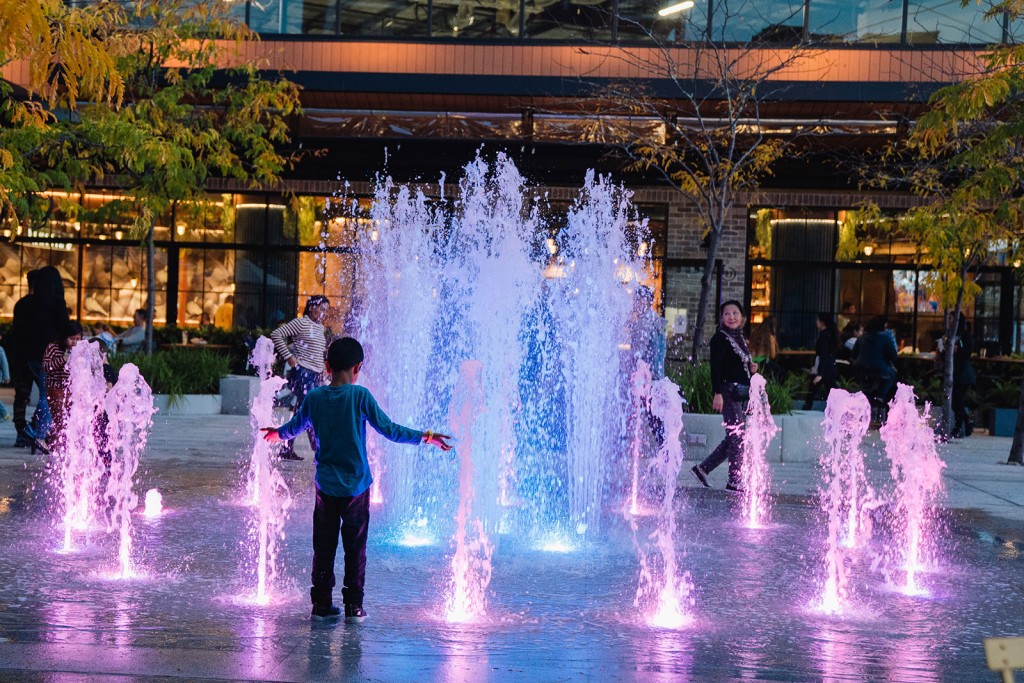
Flush-mounted spray rings providing safe, interactive water fun for urban communities.
Detailed, engineering-backed answers to the most common questions asked by international buyers, hydraulic consultants, and mechanical contractors.
Achieving identical jet heights across a 360-degree fountain spray ring requires proper internal flow distribution and hydraulic balancing. Fontana designs spray rings with dual or quad multi-inlet feed ports and internal flow-diffusing baffles. Maintaining internal water velocity between 1.2 to 2.0 m/s prevents static head drops near the inlet, while precision CNC-machined nozzle sockets ensure uniform discharge coefficients across the entire ring manifold.
For standard freshwater municipal installations, AISI 304 (1.4301) stainless steel provides adequate resistance. However, for chlorinated commercial pools, coastal urban squares, or interactive splash pads, Fontana recommends passivated AISI 316L (1.4404) stainless steel or titanium-stabilized alloys. These materials resist pitting corrosion, stress corrosion cracking, and crevice attack under continuous exposure to disinfectant chemicals.
Yes. Fontana engineers integrated ring-light systems where IP68 submersible LED luminaires (such as the UL800 series) are mounted directly onto the spray ring's structural chassis. This guarantees perfect optical alignment between the light beam and the emerging water jets, eliminating shadowing and delivering rich chromatic saturation throughout the water column.
Total flow rate is calculated by multiplying the required discharge rate per nozzle (determined by jet height and orifice size) by the total number of nozzles on the ring. Total Dynamic Head (TDH) accounts for nozzle operating pressure, pressure drops across internal ring friction, elevation head, manifold entrance losses, and piping friction. Fontana provides detailed hydraulic performance curves for every custom spray ring configuration.
Prefabricated modular spray rings are manufactured, CNC-bent, passivated, and hydrostatically tested in a controlled factory environment prior to shipment. Field-welded manifolds risk weld contamination, improper alignment, unpassivated heat-affected zones, and inconsistent flow dynamics. Fontana’s factory-made modular spray rings utilize precision flanged or union connections for rapid, reliable site installation.
Fixed circular spray rings emit static or VFD-driven vertical streams in continuous geometric patterns. Dynamic spray rings incorporate motorized swivel mechanisms or fast-acting programmable water switches (like Fontana’s YSwitch) allowing individual jets or entire ring segments to articulate, actuate, or leap synchronously for musical WaterShows.
To produce a visually continuous water wall or parabolic crystal dome, nozzle center-to-center spacing should typically range between 50 mm and 100 mm, depending on the nozzle orifice diameter and spray height. Closer spacing creates a dense, sheet-like appearance, whereas wider spacing highlights individual crystal water streams.
Spray rings up to 2.2 meters in diameter are shipped as complete single-piece welded assemblies in reinforced wooden crates. Larger spray rings (3.0 m to 15.0 m+) are manufactured in precision flanged arc segments with match-marked alignment pins, enabling seamless, straightforward assembly on site in any of the 94 countries we serve.
Partner with Fontana’s hydraulic engineering team to design, manufacture, and commission world-class spray ring systems tailored to your project’s exact architectural vision.