1. Technical Overview: High-Pressure Cooling Fog Nozzle Technology for the Belgian Market
In Western European industrial and commercial microclimate management, precision-engineered high-pressure cooling fog nozzles serve as a core technological foundation. Designed specifically for demanding industrial operations across Flanders and Wallonia, our CE-certified cooling fog nozzles operate under hydraulic pressures ranging from 50 bar to 70 bar (725 psi to 1015 psi). This pressure regime forces purified water through micro-metered ruby or anti-drip ceramic orifices, atomizing the water column into a dense cloud of aerosolized droplets measuring strictly between 5 and 15 microns (μm).
The physics governing this performance relies on flash thermodynamic evaporation. When these ultra-fine water droplets encounter ambient air in industrial zones such as the Port of Antwerp or agricultural greenhouses in Ghent, they immediately undergo liquid-to-gas phase transition. By extracting enthalpy (latent heat of vaporization) directly from the environment—amounting to approximately 2,260 kJ per kilogram of evaporated water—ambient air temperatures can be reduced by up to 12°C without wetting surfaces or machinery.
Fluidic Dynamics & Orifice Mechanics
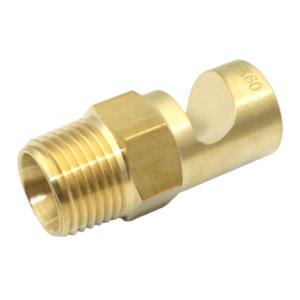
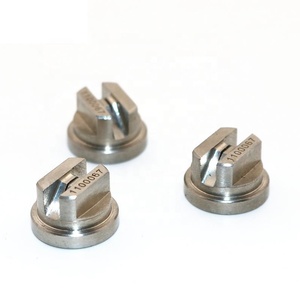
Standard industrial nozzles often suffer from rapid orifice enlargement caused by cavitation and particulate erosion. Our manufacturing processes mitigate this via precision CNC micro-machining of AISI 316L stainless steel bodies combined with synthetic ruby inserts or high-density ceramic cores (Vickers hardness > 1800 HV). This metallurgy prevents physical degradation even when exposed to treated demineralized water or mildly aggressive chemical misting solutions used in odor suppression.
| Nozzle Model / Orifice Size | Flow Rate @ 70 Bar (L/min) | Droplet Diameter (μm) | Primary Belgian Application | Anti-Drip Pressure Limit |
|---|---|---|---|---|
| CFN-010 (0.10 mm / Ruby Orifice) | 0.032 L/min | 3 – 7 μm | High-Tech Glasshouse Humidification & Data Centers | 2.5 Bar Shut-off |
| CFN-015 (0.15 mm / Ceramic Orifice) | 0.055 L/min | 5 – 10 μm | Architectural Misting & Urban Plaza Cooling (Brussels) | 2.5 Bar Shut-off |
| CFN-020 (0.20 mm / 316L Orifice) | 0.085 L/min | 8 – 14 μm | Industrial Dust Suppression & Waste Facilities (Antwerp) | 3.0 Bar Shut-off |
| CFN-030 (0.30 mm / Impaction Pin) | 0.135 L/min | 10 – 20 μm | Livestock Thermal Stress Management (Flanders Farms) | 3.0 Bar Shut-off |
2. Localized Application Scenarios Across Belgium's Key Sectors
Belgium presents a unique microclimate challenge: high humidity coastal zones coupled with intensive urban density and highly specialized agricultural glasshouses. Engineering fog cooling systems for this landscape requires tailored thermodynamic design.
Flemish Glasshouse Horticulture
In regions such as Sint-Katelijne-Waver, maintaining optimum Vapor Pressure Deficit (VPD) without soaking crops is vital for tomato and floral yields. Ultra-fine micro-mist (5-10μm) ensures consistent humidity control without leaf-wetness fungus risks.
Industrial Port of Antwerp Facilities
Bulk material handling terminals generate fine particulate matter (PM2.5 and PM10). High-pressure fog nozzles create water-droplet particle collision match, binding airborne dust particles instantly without pooling excess water on conveyers.
Urban Microclimate & Terrace Cooling
Commercial outdoor spaces in Brussels, Bruges, and Ghent utilize architectural misting poles and embedded line misting to combat the Urban Heat Island (UHI) effect, lowering dining area ambient temperatures by 8–10°C during summer heatwaves.
Case Study: Environmental Compliance in Walloon Chemical Parks
Industrial facilities in Wallonia dealing with volatile organic compounds (VOCs) and localized odor emissions deploy specialized multi-stage atomization manifolds fitted with our CE-certified stainless steel fog nozzles. By integrating high-pressure misting headers into ventilation exhausts, neutralizer fluids are atomized into sub-10-micron droplets, ensuring maximum contact surface area for catalytic neutralization before gases exit exhaust stacks.
3. European Regulatory Alignment & Sustainability Trends
Operating in Belgium requires absolute compliance with European Union harmonized standards. Our fog nozzle systems are certified under the Machinery Directive 2006/42/EC and pressure component directives (PED 2014/68/EU), granting smooth authorization by local health and safety inspectors (FPS Employment, Labour and Social Dialogue).
Key compliance vectors for Belgian engineers include:
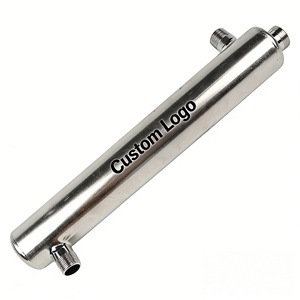
- Legionella Risk Mitigation (VMM Guidelines): Full compatibility with online UV-C water treatment systems and automated line-flush drain valves to prevent bacterial proliferation in stagnant water lines during intermittent summer operation.
- Water Resource Efficiency (EU Green Deal): High-pressure misting consumes up to 75% less water compared to low-pressure spray bars, delivering superior cooling capacity per liter through maximized surface area math (1 liter of water converted to 10μm droplets creates over 300 square meters of surface area).
- ATEX Zone Compatibility: All-metal 316L stainless steel nozzle bodies with no static-generating polymers, making them safe for explosive dust environments found in grain silos and chemical processing plants across Benelux.
Precision Manufacturing & In-House Engineering Heritage
Leveraging decades of specialized fluid engineering experience since 1971, our production processes combine intelligent multi-axis CNC machining with strict metallurgical quality checks. Every batch of cooling fog nozzles undergoes automated optical inspection for orifice concentricity and pressure-drop testing to guarantee uniform spray angles across complex installations.
Request Technical Datasheet- ✓ 100% In-House CNC Precision Machining
- ✓ Full Traceability of 316L / Brass Materials
- ✓ CE Certified & PED Directive Compliant
- ✓ Rapid B2B Export Logistics to Benelux
4. Belgian Procurement & Engineering FAQ
What certification documents are provided for municipal projects in Belgium? ▼
How do these fog nozzles perform in hard water conditions common in Belgium? ▼
What is the optimal operating pressure for flash evaporative cooling without wetting? ▼
Can your high-pressure misting lines integrate with automated BMS systems? ▼
What is the lead time for custom OEM fog nozzle production and delivery to Brussels/Antwerp? ▼
5. Strategic Selection & System Maintenance Protocol
Selecting the ideal nozzle configuration requires precise calculation of psychrometric properties, airflow rates (m³/h), and ambient heat load. An undersized system fails to lower temperatures, whereas an oversized or low-pressure system leads to surface condensation and water waste.
To maintain peak thermal performance over years of continuous operation, engineering teams must implement a structured maintenance protocol:
- Bi-Annual Orifice Inspection: Inspect ruby and ceramic inserts under optical magnification for micro-fissures or mineral scaling.
- Anti-Drip Valve Spring Calibration: Verify that internal spring tension retains its 2.5 bar to 3.0 bar sealing threshold to ensure crisp shutoff.
- Automated Line Purging: Flush supply lines with mild descaling solution prior to winter hibernation to clear residual mineral deposits.
Upgrade Your Microclimate Engineering Standards Today
Consult directly with our fluid application engineers for custom nozzle calculations, CAD integration assistance, or direct factory pricing for the Belgian market.
Inquire Now