High-durability stainless steel fountain heads, misting arrays, UV sanitization modules, and dry deck systems tested for global municipal and architectural deployment.
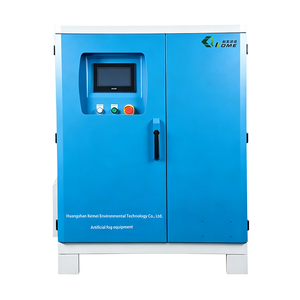
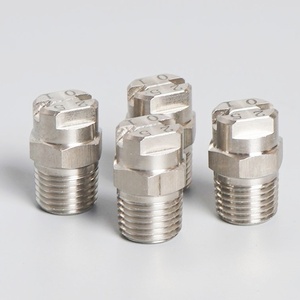
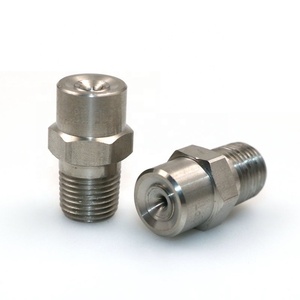
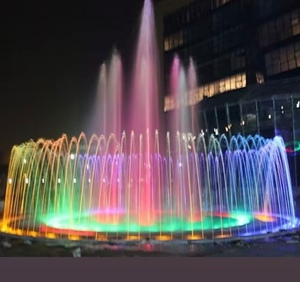
In the realm of modern commercial hydraulics, landscape architecture, and municipal water features, selecting the appropriate nozzle technology dictates not merely the visual spectacle, but the structural lifecycle, energy consumption, and maintenance interval of the entire project. As a premier **stainless fountain nozzles factory and exporter**, our engineering methodologies bridge precision metallurgy, computational fluid dynamics (CFD), and automated CNC machining to solve critical real-world challenges such as micro-cavitation, chemical corrosion, bio-film accumulation, and hydraulic turbulence.
Water feature environments present aggressive chemical profiles. Recirculating water systems accumulate dissolved solids, chlorine derivatives, dynamic pH fluctuations, and ambient pollutants. Standard brass or lower-grade alloys often suffer from dezincification and stress corrosion cracking within 24 to 36 months of deployment. Below is an engineering comparison matrix of stainless steel grades utilized in our manufacturing facilities:
| Material Grade | PREN (Pitting Resistance Index) | Tensile Strength (MPa) | Ideal Application Environment | Corrosion Resistance Profile |
|---|---|---|---|---|
| AISI 304 Stainless Steel | 18.0 - 20.0 | 515 - 620 | Freshwater municipal fountains, indoor atrium displays | Excellent for neutral fresh water; moderate resistance to mild urban pollutants. |
| AISI 316L Stainless Steel | 23.0 - 25.5 | 485 - 580 | Chlorinated public pools, coastal commercial plazas, dry deck interactive zones | Superior molybdenum-enhanced protection against chloride pitting and crevice corrosion. |
| Duplex 2205 (UNS S31803) | 32.0 - 35.0 | 655 - 880 | High-salinity maritime waterfronts, geothermal displays, heavy industrial splash parks | Ultra-high mechanical strength coupled with immunity to chloride-induced stress corrosion cracking. |
A critical metric distinguishing high-tier fountain nozzle manufacturing from generic hardware production is the internal hydrodynamic profiling. When fluid passes through a restricted nozzle orifice at high velocity, local pressure drops below the liquid’s vapor pressure can induce localized micro-cavitation. These collapsing vapor bubbles generate localized shockwaves up to 1,000 MPa, eroding internal metal walls and causing stream distortion.
Our internal nozzle geometry incorporates smooth, computer-modeled laminar contraction curves (based on the Venturi and Bernoulli equations). By maintaining smooth boundary layer acceleration, our nozzles eliminate internal pressure dips, drastically reduce acoustic noise, and maintain crystal-clear water columns (Laminar Jets) even under dynamic variable-speed pump modulation.
Every nozzle orifice is turned on multi-axis Japanese CNC centers achieving concentricity tolerances within ±0.01mm. This eliminates irregular spray patterns and guarantees uniform spray trajectory across multi-nozzle rings.
Post-machining, all stainless steel fountain nozzles undergo automated ultrasonic degreasing followed by citric-nitric acid passivation according to ASTM A967 standards, forming a continuous, self-healing chromium-oxide passive film.
Fully compliant with international engineering benchmarks including ISO 9001 quality management, CE electrical certification for integrated LED modules, and international freight-safe wooden/foam modular packaging.
As global municipal planners, commercial real estate developers, and hospitality conglomerates prioritize operational sustainability, the market for fountain nozzles and aquatic hardware is undergoing a structural evolution. Procurement officers and architectural specifiers must consider four key technological shifts when sourcing components:
With escalating global urban heat island (UHI) effects, landscape developers are replacing purely decorative open-water basins with micro-droplet misting systems and high-pressure fog arrays. Operating at working pressures between 70 bar and 100 bar, modern stainless misting nozzles atomize water into ultra-fine droplets (5 to 15 microns). This induces flash evaporative cooling, reducing ambient surrounding micro-climate temperatures by up to 7°C to 10°C without wetting surrounding pedestrian footpaths.
Urban real estate is transitioning away from standing water pools toward zero-depth dry deck fountains (splash pads). These installations demand flush-mounted stainless steel housing assemblies equipped with fast-response solenoid valves, integrated low-voltage RGBW/RGBA LED luminaires, and anti-slip surface grates. Sourcing teams now demand modular "plug-and-play" dry deck kits (such as our FPKmini series) that drastically reduce onsite civil installation times and prevent water accumulation, mitigating slip hazards and meeting stringent public safety standards.
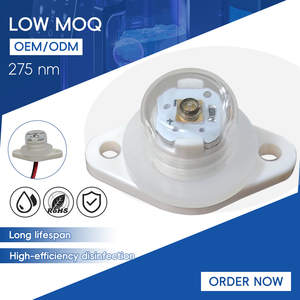
Modern public health directives, including European EN 15288 and US MAHC guidelines, demand rigorous pathogen suppression in public water features to eliminate Legionella, E. coli, and Cryptosporidium. Modern fountain nozzle assemblies are now engineered to operate seamlessly alongside inline 275nm UV-C LED sterilization modules. By passing recirculated water through concentrated UV-C radiation chambers prior to jet expulsion, commercial operators preserve water clarity and biological safety without over-saturated chemical dosing that degrades seals and metal finishes.
Rooted in over five decades of engineering heritage tracing back to 1971, our manufacturing enterprise has consistently pushed the boundaries of aquatic technology. Having supplied landmark installations in over 94 countries—spanning luxury resorts in Dubai, landmark civic plazas in Europe, to expansive entertainment complexes in North America—our facility provides end-to-end reliability for international procurement managers.
Clear technical and commercial answers for project engineers, procurement directors, and landscape architects.
AISI 316L contains 2% to 3% Molybdenum by weight, which significantly increases its Pitting Resistance Equivalent Number (PREN) compared to AISI 304. In environments containing chlorinated water (such as interactive play fountains or public swimming pools) or ambient sea salt (coastal installations), 316L prevents microscopic pitting corrosion and localized rusting, extending component operational lifespan by 300% or more.
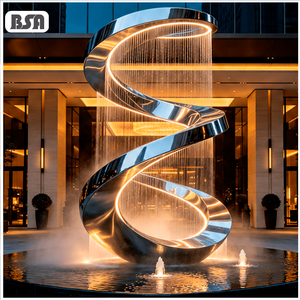
Yes. As a direct manufacturing factory with internal 5-axis CNC machining centers, toolmaking divisions, and hydro-engineering staff, we regularly manufacture custom nozzle manifolds, bespoke spray rings, architectural sculpture fountains, and specialized jet orifices based on client CAD/STEP files or physical samples.
Stainless steel threads can experience cold welding (galling) under high torque. We mitigate this through ultra-precise CNC thread cutting (NPT/BSP standards), specialized surface passivation, and optional anti-galling coatings (such as electro-polished surfaces or hard anodized threading inserts). We also provide installation guidelines recommending appropriate PTFE or nickel-based anti-seize compounds.
Standard catalog nozzles and spray fittings are maintained in stock for rapid dispatch within 3 to 7 business days. Custom engineered nozzle arrays or large project orders typically require 2 to 4 weeks depending on production volume. All export shipments are protected in custom-cut PE foam inserts, moisture-sealed vacuum wrap, and heavy-duty ISPM-15 compliant fumigated wooden crates designed for ocean or air freight.
Yes. Our nozzles feature internally smoothed flow-straightener vanes and optimized expansion cones designed to prevent vortex breakup. Whether operating under steady continuous pressure or rapid dynamic modulation for musical dancing water shows, the spray geometry remains coherent without spraying mist off-target.
Connect with our senior hydro-engineering team today. Download our complete 2025–2026 technical product catalog, request CAD/BIM files, or get a direct factory quote for your project site.
Get Catalog