
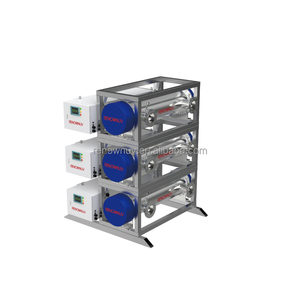
Explore our industry-grade ultraviolet water treatment portfolio. From sub-gram UVC-LED modules for point-of-use pure water to high-flow 80m³/h industrial RAS units, our equipment is certified for maximum pathogen inactivation and TOC reduction.
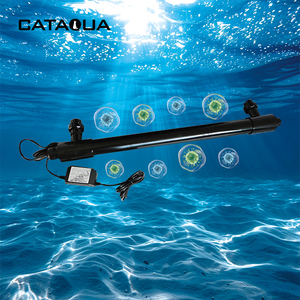
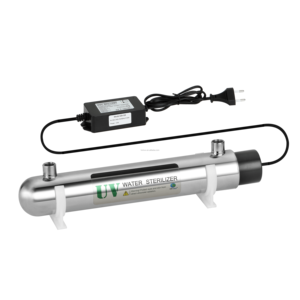
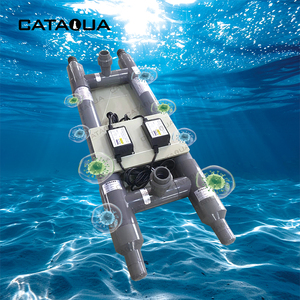
Ultraviolet (UV) water disinfection has transitioned from an auxiliary polishing step to a primary chemical-free biosecurity barrier across municipal, pharmaceutical, semiconductor, aquaculture, and commercial pool sectors. As global environmental regulations restrict chlorine byproducts (THMs and HAAs), selecting high-performance UV sterilizers engineered in China offers unprecedented capital efficiency without compromising operational reliability.
UV disinfection operates in the UV-C spectrum (specifically 200 nm to 280 nm), with peak germicidal effectiveness occurring between 254 nm and 265 nm. When microorganisms such as Cryptosporidium parvum, Giardia lamblia, Escherichia coli, and viral agents pass through the irradiation chamber, UV-C photons penetrate the cell wall, causing thymine dimerization in DNA and RNA chains. This structural damage inhibits transcription and replication, rendering pathogens biologically inert without modifying water taste, pH, or chemical composition.
For semiconductor ultra-pure water (UPW) loop systems and pharmaceutical WFI (Water for Injection) loops, standard 254nm disinfection is augmented by 185nm vacuum UV (VUV) light. Photons at 185nm cleave water molecules ($H_2O$), producing highly reactive hydroxyl radicals ($\cdot OH$). These non-selective oxidants rapidly decompose trace Total Organic Carbon (TOC) into carbon dioxide and water molecules, achieving ultra-pure standards below 1 ppb.
Understanding the operational tradeoffs between Low-Pressure High-Output (LPHO) Amalgam lamps, Medium-Pressure systems, and Solid-State UVC LEDs is critical for optimizing Total Cost of Ownership (TCO).
| Technology Platform | Dominant Wavelength | Electrical Efficiency | Lamp Lifetime | Primary Industrial Applications |
|---|---|---|---|---|
| Low-Pressure Amalgam (LPHO) | 254 nm Monochromatic | 35% - 40% (High) | 12,000 - 16,000 hrs | Municipal Drinking Water, Recirculating Aquaculture Systems (RAS), Bottling Plants |
| Medium-Pressure (MPUV) | 200 - 400 nm Polychromatic | 15% - 20% (Moderate) | 4,000 - 8,000 hrs | Commercial Swimming Pools (Chloramine destruction), High-flow Wastewater |
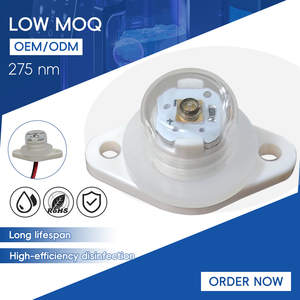
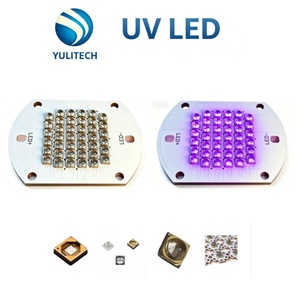
| Solid-State UVC-LED | 265 nm - 275 nm Tunable | 5% - 12% (Rapidly Improving) | 10,000 - 25,000 hrs (Instant On/Off) | Point-of-Use (POU) Dispensers, Medical Devices, Compact Flow Modules |
| Dual-Wavelength VUV/UV | 185 nm & 254 nm Dual Peak | 30% - 35% | 10,000 - 12,000 hrs | Semiconductor UPW Polishing, Microelectronics, Pharmaceutical TOC Reduction |
As global supply chains demand higher environmental compliance, energy efficiency, and digital integration, B2B buyers must align their procurement strategies with four key industry vectors:
Driven by the Minamata Convention on Mercury, industrial buyers are progressively phasing out mercury discharge tubes in low-flow applications. Solid-state UVC-LED modules operating at optimal germicidal wavelengths (265nm-275nm) eliminate warm-up times, enable millions of duty cycles, and allow compact integration into healthcare and beverage dispensing equipment.
Modern UV systems incorporate digital electronic ballasts with Modbus, BACnet, and RS485 communication protocols. Real-time monitoring of UV Transmittance (UVT), lamp operating hours, sleeve fouling, and internal reactor temperature allows plant operators to move from reactive maintenance to automated predictive servicing schedules.
Advanced Chinese manufacturers now leverage Computational Fluid Dynamics (CFD) modeling to optimize reactor chamber geometry. By creating controlled turbulence inside 316L stainless steel or UPVC vessels, water particles are exposed to uniform UV dose distribution ($mJ/cm^2$), preventing hydraulic short-circuiting while minimizing pressure drop across high-flow manifolds.
Fouling of quartz sleeves by iron, manganese, and hardness scale remains a primary cause of UV dose decay. Leading Chinese suppliers are applying nano-scale hydrophobic fluoropolymer coatings to high-purity synthetic quartz sleeves. This innovation reduces mineral adhesion by up to 60%, significantly extending the duty cycle between automatic mechanical wiper sweeps.
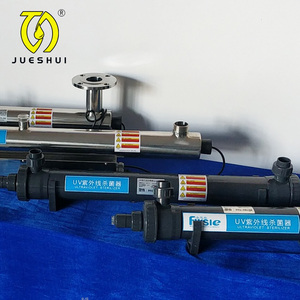
Traditional stainless steel housings suffer from pitting corrosion in saline environments such as land-based aquaculture (RAS) and seawater desalination pretreatments. The industry shift toward high-density UPVC, titanium alloy, and fiberglass reinforced plastic (FRP) housings guarantees complete chemical resistance against aggressive marine fluids.
As a direct manufacturer with decades of specialized hydraulic and photochemical engineering expertise, we provide global engineering clients, distributors, and OEMs with unmatched manufacturing capabilities:
Every reactor vessel, flange manifold, and quartz sleeve seal is precision-machined in our own ISO9001-certified facility. Robotic orbital welding of 316L stainless steel chambers ensures internal electropolishing to Ra < 0.4 µm, satisfying stringent hygienic standards for pharmaceutical WFI systems.
Our UV dose calculations are validated using MS2 coliphage and Bacillus subtilis bio-assay testing under variable UV Transmittance (UVT) conditions. Every unit undergoes 100% hydrostatic pressure testing at 1.5x working pressure (up to 16 bar) and high-voltage electrical safety screening prior to export packaging.
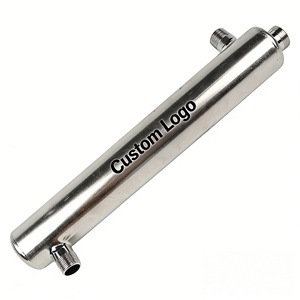
Whether you require custom port configurations, multi-lamp array manifolds, specialized voltage ballasts (85V–265V wide range), or private label branding, our engineering team delivers 3D CAD models and hydraulic simulations within 48 hours of project consultation.
Essential technical and commercial answers for municipal engineers, EPC contractors, and global equipment buyers.
Consult with our senior application engineers to request detailed hydraulic sizing calculations, custom 3D CAD drawings, or competitive factory-direct quotation packages.
Get a Quote