
Discover high-performance components, DMX512 interactive modules, IP68 underwater luminaires, and industrial UV filtration systems tailored for architectural water installations worldwide.
In modern luxury hospitality, corporate headquarters, and high-end residential interiors, indoor water walls (also termed water cascade walls, sheet waterfalls, or vertical fluid features) represent the pinnacle of biophilic architectural design. Achieving a seamless, whisper-quiet, splash-free indoor water wall demands deep engineering expertise in fluid mechanics, surface tension modulation, precise metallurgy, and automated micro-filtration.
When searching for the best indoor water walls manufacturers & suppliers in China, enterprise buyers, MEP (Mechanical, Electrical, and Plumbing) contractors, and lead landscape architects must evaluate vendors based on strict engineering criteria rather than aesthetic prototypes alone. China's top-tier manufacturers have evolved beyond simple assembly; they now operate advanced CNC precision machining facilities, automated orbital laser welding lines, and dedicated hydro-testing laboratories capable of verifying laminar flow dynamics before international dispatch.
Key Technical Insight: The primary point of failure in commercial indoor water features is not pump motor breakdown, but unmanaged fluid turbulence—causing micro-splashing, acoustic resonance over 65 dBA, bio-film accumulation, and calcium scaling on vertical substrates. Chinese OEM leaders mitigate these through precision-machined flow distribution manifolds and integrated UV-C sterilization loops.
The core fluid mechanical objective of an indoor water wall is maintaining a unbroken, uniform laminar water sheet across substrates ranging from 2 meters to over 15 meters in height. Turbulence occurs when water velocity exceeds the critical Reynolds Number ($Re$), converting smooth fluid flow into chaotic droplets that spray outside the basin boundary.
Leading Chinese engineering suppliers utilize multi-stage pressure equalization chambers within the top weir reservoir. Water is introduced into a lower header pipe featuring CNC-drilled, staggered distribution orifices. It passes through reticulated open-cell baffle matrices and over a micro-honed AISI 316L stainless steel weir lip. This ensures the fluid exits at a uniform velocity profile across the entire width of the feature, eliminating dry spots and splash vectors.
Sourcing large-scale indoor water walls internationally requires absolute trust in component reliability, material provenance, and export logistics. China's elite manufacturing hub leverages integrated industrial supply chains to deliver bespoke architectural water features with unmatched cost-to-quality ratios.
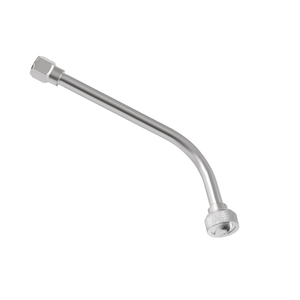
Every distribution header, nozzle array, and custom bracket is machined in-house using 5-axis CNC equipment and marine-grade AISI 316L stainless steel. This guarantees tolerances within ±0.05mm, preventing header deformation under hydraulic pressure.
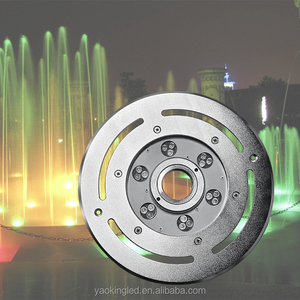
Illumination transforms static water sheets into dynamic visual art. China’s premier factories manufacture IP68-rated, V4A (1.4404) stainless steel LED luminaires rated for continuous immersion and pressure tested up to 70 meters underwater depth.
Modern water walls interface directly with modern Building Management Systems (BMS). Embedded DMX512 controllers allow facility managers to program flow intensity, light color sequences, automated backwashing cycles, and remote telemetry alerts.
The choice of vertical substrate dictates visual texture, maintenance frequency, and structural loading requirements. Below is an engineering evaluation prepared by senior Chinese water wall specialists:
| Substrate Material | Visual Effect | Splash Index | Maintenance Profile | Best Architectural Application |
|---|---|---|---|---|
| Tempered Low-Iron Glass | Crystal-clear, reflective, dual-sided visibility | Ultra-Low (< 1%) | Weekly squeegee clean; zero porosity | Corporate Atriums, Luxury Retail Partition Walls |
| Textured Slate / Granite | Natural organic texture, soothing ripple sounds | Moderate (Requires precise flow) | Monthly descaling; porous stone sealer needed | Hotel Lobbies, Wellness Spas, Executive Suites |
| Mirror-Finished 316L SS | Futuristic, high-contrast metallic ripple sheen | Low (< 2%) | Bi-weekly polish; immune to cracking | Tech Headquarter Entrances, High-Traffic Public Spaces |
| Cell-Cast Optical Acrylic | Seamless ultra-wide spans, curved geometry | Very Low (< 1%) | Anti-static treatment; scratch monitoring | Curved Interior Feature Walls, Airport Terminals |
Because indoor water walls operate within recirculating HVAC environments, maintaining water quality is vital to prevent airborne bacterial growth (such as Legionella pneumophila), algae formation, and mineral scale build-up. Unlike outdoor fountains, chemical dosing in indoor installations must be tightly controlled to prevent chlorine odours or volatile chemical off-gassing.
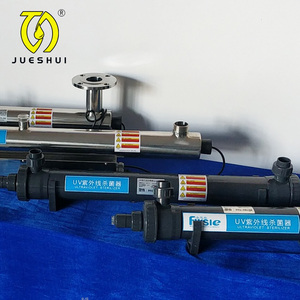
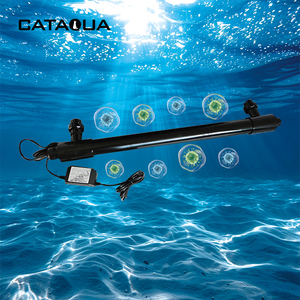
Top Chinese suppliers integrate specialized water treatment skids directly into the lower basin enclosure. Systems such as the JUESHUI UV Sterilizer & UPVC Industrial Purification Units provide 254nm UV-C germicidal irradiation, neutralizing 99.9% of waterborne pathogens without altering room air quality.
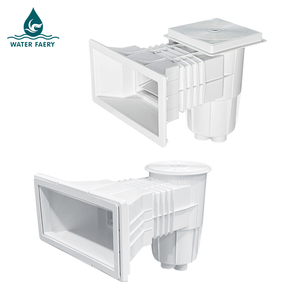
Water is continuously pulled through high-efficiency ABS or fiberglass skimmer boxes, routed through micro-glass fiber cartridge filters (down to 5 microns), treated via inline UV disinfection, and pushed through a stainless steel heat exchanger to maintain ambient water temperatures.
Evaporative loss in indoor spaces causes Total Dissolved Solids (TDS) and hard mineral ions (Calcium and Magnesium) to concentrate rapidly in the recirculating reservoir. Left unchecked, white limescale will coat glass or stainless steel substrates, ruining the smooth water film.
Leading Chinese manufacturers incorporate automated auto-fill RO water supply valves with continuous TDS conductivity sensors. When TDS levels exceed 250 ppm, the system automatically initiates a partial bottom-drain blowdown cycle and refills with purified RO water.
As commercial property developers prioritize ESG (Environmental, Social, and Governance) scores and LEED certifications, the architectural water feature manufacturing industry in China is undergoing significant technological advancement. Sourcing managers should align procurement contracts with these key industry shifts:
Legacy water features used heavy AC induction pumps that consumed excessive kilowatt-hours and radiated acoustic hum into building structures. Next-generation indoor water walls utilize variable-speed, brushless DC magnetic drive pumps. These pumps reduce energy consumption by up to 60% while operating under 40 dBA ambient noise levels.
On-site construction delays drive up installation costs. The leading trend among top Chinese suppliers is shipping fully pre-engineered, modular water wall cassettes. These include integrated basins, pump skids, filtration units, distribution headers, and waterproof LED lighting pre-tested at the factory before container packing.
Architects increasingly specify water walls to serve dual functions: providing visual tranquility and masking ambient office chatter. Advanced custom water walls feature adjustable drop height weir lips and acoustic soundboards, allowing facility managers to fine-tune white noise output from a delicate whisper to a rhythmic cascade.
Navigating overseas procurement requires a structured vetting process to ensure your chosen Chinese factory possesses the requisite technical capabilities, international certifications, and post-sale engineering support. Here is the recommended step-by-step evaluation protocol for enterprise buyers:
Answers to common technical, installation, and procurement questions from architects, contractors, and global buyers.
Standard manufacturing lead time for custom-engineered architectural water walls ranges between 20 to 35 calendar days following shop drawing approval. For complex installations featuring custom DMX512 programming or specialized stone carving, lead times may extend to 45 days. Expedited production schedules can be arranged for time-sensitive commercial fit-out projects.
All glass panels, stainless steel header assemblies, and delicate control skids are packed in export-grade, fumigated ISPM-15 compliant wooden crates. High-density shock-absorbing polyethylene foam surrounds all edges, and moisture-absorbing desiccant bags are sealed inside vacuum plastic wrapping to prevent oxidation or corrosion during ocean transit.
Yes. Leading Chinese manufacturers specialize in complete OEM/ODM customized fabrication. Engineering design teams can translate DWG, STEP, or PDF architectural concepts into fully structural, buildable water features, offering advice on structural wall anchoring, hydraulic pipe routing, and electrical power supply requirements.
The site must provide a load-bearing wall or steel structural frame capable of supporting the dead weight of the feature and water mass. Electrical connections (220V/380V dedicated circuit with GFCI protection), a cold water auto-fill supply line (preferably RO/softened water), and a floor drain point for maintenance blowdown must be installed near the lower basin reservoir.
Laminar sheet water walls generate minimal aerosol misting compared to open fountain jets, resulting in modest evaporation rates. In climate-controlled commercial buildings, the added humidity is easily managed by standard HVAC systems, often serving as a beneficial natural humidifier in dry, air-conditioned offices.
Routine maintenance involves weekly visual checks of the water level and skimmer basket, monthly wiping down of the substrate surface to prevent dust buildup, bi-monthly inspection of the UV lamp tube and cartridge filter element, and annual replacement of seal gaskets and UV lamps.
Need engineering design assistance, CAD shop drawings, or a competitive factory-direct quotation for your next architectural project? Contact our technical team today.