Explore OEM/ODM componentry manufactured to international architectural standards for luxury commercial and civic developments.
Every distribution header, weir manifold, and underwater enclosure is machined in-house using selected 304/316L stainless steel alloys to eliminate tolerance mismatches and corrosion under continuous submerged duty.
Fully compliant with international lighting control standards. Our low-voltage DC24V underwater luminaires and fast-response water solenoids synchronize seamlessly with theatrical control systems.
Utilizing high-tensile borosilicate and low-iron tempered glass assemblies, matched with vibration-dampened frame structures engineered for seismic, acoustic, and high-traffic public space stability.
Glass water features represent the pinnacle of architectural water design—seamlessly blending fluid dynamics, optical clarity, structural physics, and light manipulation. Whether installed as indoor glass water walls in luxury hotel lobbies, exterior rain curtains in corporate plazas, or interactive mist-glass installations in public spaces, these systems demand ultra-precise engineering to operate flawlessly over extended lifespans.
As international procurement directors, landscape architects, and MEP contractors evaluate potential partners, selecting the ideal China Best Glass Water Features Manufacturer & Factories requires a deep technical audit beyond basic aesthetics. Superior manufacturing hinges on hydraulic uniformity, hydrophobic surface chemistry, corrosion-proof material selection, and rigorous electrical waterproofing.
E-E-A-T Sourcing Note: True industrial excellence lies in the details. A single micro-deviation in a stainless steel distribution weir can cause fluid sheet separation, leading to dry spots, splash degradation, and accelerated calcification across glass panels.
Specifiers must understand the fundamental physical and mechanical distinctions across commercial glass water features before drafting RFQ documents:
Surface-guided water walls rely on surface tension to adhere a uniform sheet of water onto a vertical glass panel. Water travels down ultra-clear low-iron tempered glass or textured wave-pattern glass. Key engineering parameters include:
Designed for multi-story atrium spaces, free-fall systems drop clean water droplets or continuous streams along vertical stainless steel cables anchored adjacent to structural glass panels. The acoustics are engineered via lower basin water depth modulation and anti-splash matrix grids.
Sealed acrylic or toughened glass chambers filled with specially formulated non-aqueous or treated aqueous fluids. Micro-bubbles are introduced via precision brass or stainless steel diffusers, illuminated by high-CRI RGB/RGBW LED systems controlled via DMX protocols.
Selecting the correct raw materials prevents premature system degradation caused by chemical water treatment, UV exposure, and structural stress. Below is a comparative engineering reference used by leading OEM factories in China:
| Component | Standard Material Grade | Architectural Premium Grade | Performance Standard / Advantage |
|---|---|---|---|
| Glass Panels | Standard Tempered Float Glass | Ultra-Clear Low-Iron Borosilicate/Laminated | 91.5%+ Light Transmittance; Thermal Shock & Impact Resistant |
| Distribution Weirs | 304 Stainless Steel (Mill Finish) | 316L CNC Mirror-Polished Stainless Steel | Zero Chlorinated Corrosion; Micron-Level Slot Uniformity |
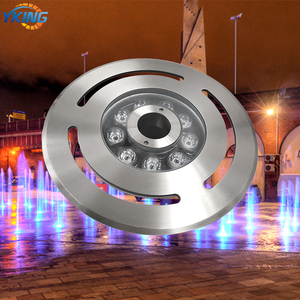
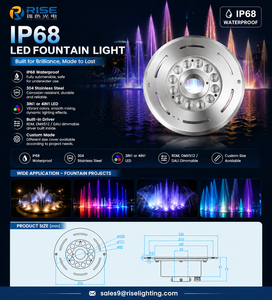
| Submersible Luminaires | IP67 Aluminum / Plastic Housing | IP68 Electropolished 316 Stainless Steel | 70m Depth Tested; High-Density Silicone Seal Gaskets |
| Hydraulic Tubing | Standard PVC Hose | Flexible Reinforced EPDM / Stainless Braided | Kink-Proof, UV-Stabilized, High Operating Pressure Tolerance |
The global architectural water feature market is undergoing a technical evolution driven by sustainability, digital control, and hybrid atmospheric integration. B2B procurement teams must align their supply chain specifications with these advancing industry vectors:
Modern glass water features are no longer static hydraulic loops. Advanced projects incorporate integrated IoT sensor arrays measuring fluid conductivity, pH, water level, and pump pressure. DMX512 dynamic controllers dynamically adjust flow velocity alongside LED light intensity, creating immersive digital shows synchronized with ambient audio.
With stringent global green building certifications (LEED v4.1, BREEAM, and WELL), manufacturers are replacing traditional AC pumps with variable-speed DC24V or DC48V brushless pumps. These systems reduce energy consumption by up to 45% while enabling fine-tuned micro-flow modulations across glass surfaces.
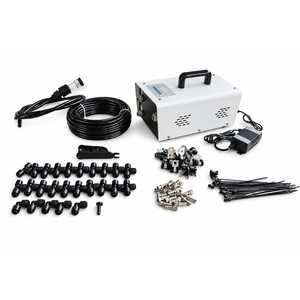
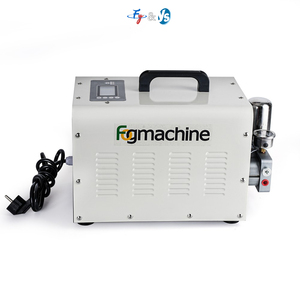
Combining high-pressure mist systems (operating at 70–100 bar) with glass water walls has become a major trend in luxury hospitality and outdoor civic parks. The atomized water droplets (5–15 microns) provide evaporative cooling, lower ambient temperatures by up to 7°C, and create a multi-dimensional visual layer against glowing glass backdrops.
Scale accumulation (calcium and magnesium carbonate deposits) is the leading operational challenge for indoor water walls. Leading Chinese manufacturers are now pre-treating architectural glass with permanently bonded hydrophobic nano-coatings. These coatings prevent mineral adhesion, reduce maintenance cycles by 70%, and preserve optical clarity under high-mineral water conditions.
When sourcing glass water feature equipment from top Chinese manufacturers, relying on suppliers with verified engineering heritage ensures seamless project delivery. Drawing upon manufacturing principles honed over 50+ years of global hydraulic innovation across 94 countries, premier manufacturing facilities offer distinct technical advantages:
Quality Assurance Protocol: Prior to international crate packing, every complete glass water curtain distribution system undergoes a 72-hour continuous hydraulic balance test inside the factory to verify fluid ribbon consistency and zero splashing.
To ensure high project efficiency and eliminate field rework, international buyers should follow a standardized procurement protocol when engaging Chinese manufacturers:
Direct technical answers to questions commonly raised by B2B buyers, contractors, and architectural specifiers.
Splash control is achieved through precise slot design in the top distribution weir (machined to sub-millimeter tolerances), maintaining ideal water surface tension, calibrating low-vibration pumps, and using an angled anti-splash receiving matrix in the bottom reservoir.
For standard indoor installations, AISI 304 stainless steel is sufficient. For outdoor, coastal, or chlorinated pool environment installations, AISI 316L (low carbon) stainless steel with electropolished surface treatment is mandatory to prevent pitting corrosion.
Yes. OEM factories supply fully customized control panels incorporating DMX512 controllers, DALI dimming protocols, variable frequency drives (VFDs), and programmable logic controllers (PLCs) pre-configured to client sequences.
Standard components (pumps, nozzles, IP68 lights) ship within 7–14 days. Complete engineered glass water feature kits requiring custom CNC stainless fabrication and toughened glass sizing typically take 25–35 days from approved CAD drawings.
Glass panels and metallic weir manifolds are packed separately in heavy-duty, fully enclosed ISPM-15 certified plywood crates lined with high-density EVA shock-absorbing foam and vacuum-sealed anti-moisture barrier films.
Leading suppliers provide complete technical design assistance—including hydraulic head loss modeling, electrical load schedules, 2D CAD piping schematics, and 3D Revit/BIM models for architectural integration.
Request our complete engineering catalog, detailed product specifications, or speak directly with our Senior Hydraulic Engineers for custom project consultation.
Get Catalog