
0%

Dry Deck Fountains turn a paved plaza into a place for movement, play, and brief moments of calm. Their no-standing-water design can make a space easier to use for events and everyday foot traffic. Yet the right system depends on more than appearance. Drainage, slip-resistant paving, local climate, maintenance access, and control equipment all shape how well a fountain performs.

Fountain designer Mark Fuller, founder of WET Design, is known for creating interactive water experiences. A practical design principle inspired by that work is: “Let water invite people in while serving the character of the place.” This is an editorial paraphrase, not a verified verbatim quotation. It points to a useful distinction: the best fountain type should fit its setting, not simply produce the biggest display.

This guide explores the top types of Dry Deck Fountains, from flush-mounted jet arrays and interactive splash features to programmable sequences and musical displays. Flush jets can create clean, changing patterns across a plaza. Interactive systems respond to visitors, though they need thoughtful controls and regular upkeep. Choreographed fountains add drama, but they may demand more complex programming. The categories can overlap. That is worth remembering. A lively installation can still feel tiring if noise, spray, or crowded controls are overlooked. The details matter: a narrow channel for runoff, a smooth stone edge, or a jet timed for a child’s step can change the experience. Each type brings trade-offs, and the right choice begins with how people will actually use the space.
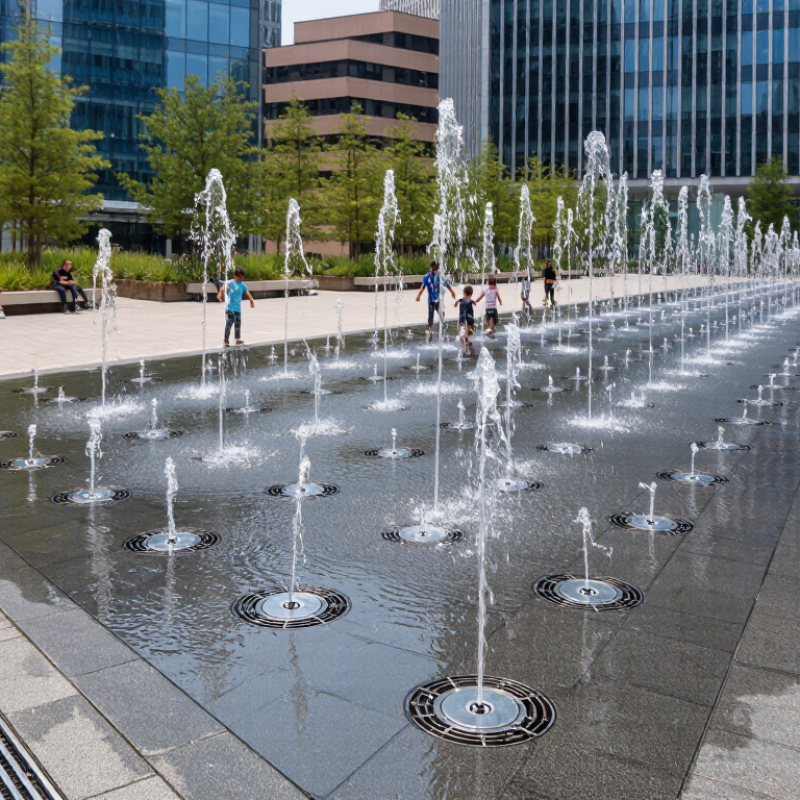
What Are the Top Types of Dry Deck Fountains?

Flush-Mounted Dry Deck Fountains

What Are the Top Types of Dry Deck Fountains?

Flush-Mounted Dry Deck Fountains

Flush-mounted fountains place nozzles level with the surrounding paving. When switched off, the deck stays open for walking, events, or play. When running, jets rise from slots or small grates, then drain into a concealed collection basin. The effect can feel surprising. The engineering should not.

Good performance depends on coordinated drainage, filtration, and pump access. Paving needs a consistent fall toward the drains, without leaving puddles around the spray zone. Designers should also consider slip-resistant surfaces and maintenance access before fixing the nozzle layout. The U.S. Geological Survey’s 2015 national water-use report estimated freshwater withdrawals at 281 billion gallons per day nationwide. That figure is not fountain-specific, but it underlines why recirculation and leak checks matter. Small losses add up.

Tips: Confirm drain capacity with the expected spray volume, and test the surface after installation. Keep access panels reachable. Check them regularly. One practical detail is easy to overlook: wind can push jets onto nearby paving, so adjust height and spacing on site. The drawings may look perfect; real water can disagree.

Top Types of Dry Deck Fountains: Flush-Mounted and Related Designs

Compare common outlet configurations by their visible design features. A value of 1 means the feature is present; 0 means it is not. This is a design comparison, not a performance rating.

Flush-mounted jets sit level with the surrounding deck. Other dry-deck layouts use grates, retractable nozzles, or narrow slots; each keeps the water collection system beneath or within the paved surface.

Interactive Splash Fountains

Interactive splash fountains bring water jets flush with the paving, so visitors can run through them without entering a deep pool. A sudden fan of water, a low bubbling jet, and a timed sequence can make a small plaza feel lively. They also suit families with varied ages and mobility needs when routes are level and slip-resistant. Keep controls simple. Children should not need instructions to enjoy the space.

The National Recreation and Park Association’s 2023 Agency Performance Review reports that roughly two-thirds of surveyed park agencies provide splash pads. That figure signals broad adoption, not proof that every installation succeeds. Design still depends on shade, drainage, water treatment, and staff capacity. A CDC analysis of treated recreational water venues recorded 493 outbreaks and 27,219 illnesses from 2000 through 2014; the data cover multiple venue types, not splash fountains alone. They are a useful reminder that recirculating water needs careful monitoring. Jets can look effortless. Their operation is not. A modest layout with visible drains and clear sightlines may serve people better than a crowded pattern of flashy effects. And honestly, designers can underestimate how loud pumps feel beside a quiet seating area. That detail deserves a site test before construction.

Programmable Jet Fountains

Programmable jet fountains bring movement to dry deck spaces without leaving a permanent pool. Nozzles set flush with the paving send water upward, then drain it through a collection system. A controller can vary jet height, timing, and sequence, creating patterns that suit a plaza, hotel entrance, or public courtyard. Some systems add lighting for evening use. Keep expectations practical: wind can bend narrow streams, and complex choreography needs careful setup. The first design may not feel right.

Tips: Ask for a coordinated test before opening. Check drainage, slip-resistant paving, and access to pumps and filters. Record the programmed settings so staff can restore them after maintenance.

Good programming balances visual rhythm with dependable operation. Short bursts can feel lively, while slower sequences may better suit quiet spaces. Specify how the fountain behaves during strong winds or equipment faults; a simple shutdown mode can prevent unwanted spray. Maintenance matters. Nozzles can clog, and changing water conditions may affect performance. A thoughtful design leaves room for inspection, even if that means sacrificing a little visual drama.

What Are the Top Types of Dry Deck Fountains? – Programmable Jet Fountains
Fountain Type How It Works Typical Visual Effect Programming Options Key Design Considerations
Vertical jet fountains Flush-mounted nozzles send water upward in straight streams. Clean columns of water arranged as individual jets or coordinated groups. Vary jet height, timing, and sequence; group jets into patterns. Jet height depends on nozzle selection, pump capacity, and wind exposure. Provide effective drainage and slip-resistant deck surfaces.
Multi-jet array fountains A group of independently controlled or zoned nozzles operates across the deck. Rows, grids, waves, and moving patterns created by jets switching in sequence. Coordinate zones, chase effects, timed sequences, and show presets. Allow for access to nozzles and service equipment. Precise effects require suitable hydraulic zoning and control equipment.
Jumping jet fountains Specialized nozzles project a coherent stream through the air toward a receiving point. Arcing or apparently “jumping” streams, sometimes arranged in a sequence. Control stream timing and coordinate multiple launch points for choreographed effects. Stream alignment can be affected by wind and installation accuracy. The receiving area and water return path need careful planning.
Laminar jet fountains Designed nozzles form smooth, relatively clear streams with reduced turbulence. Glass-like arcs or straight streams that can appear solid under suitable lighting. Sequence on/off events and coordinate effects with lighting where installed. Water quality and nozzle cleanliness affect stream clarity. Outdoor wind can disrupt the stream.
Aerated or foam jet fountains Nozzles mix air with water to produce a bubbly, white-water plume. Bright, textured columns that remain visually distinct in daylight. Switch zones or vary effect timing; coordinate with other jet types in a programmed show. These jets can create more splash than clear-stream styles. Design should account for water loss, drainage, and nearby walking areas.
Mist and fog effects Fine droplets are dispersed from specialized outlets, often with a high-pressure misting system. A low cloud or soft atmospheric veil across part of the fountain area. Schedule misting periods and coordinate operation with other fountain effects. Wind strongly affects mist direction and coverage. Use appropriate water treatment and plan for wet surfaces and visibility.

Illuminated Dry Deck Fountains

Illuminated Dry Deck Fountains

Illuminated dry deck fountains pair flush-mounted jets with underwater or recessed lights, keeping the paving open when the water is off. After dusk, focused white beams can outline individual streams, while softer, wider lighting makes the entire splash area easier to read.

The U.S. Department of Energy’s Energy Saver guidance says LED lighting uses up to 90% less energy than incandescent lighting.

That comparison supports efficient LED selection, though actual fountain-system savings depend on pump operation, controls, and fixture design.

Specify fixtures and connections suited to wet, splash-prone conditions, with accessible service points below the deck. A maintenance team should be able to reach them without removing large areas of paving.

Small details matter. Pale stone can bounce light into visitors’ eyes, and closely spaced jets may create glare when every light is aimed upward. A lighting mock-up after dark can expose those issues before installation. Color-changing effects offer flexibility, but add controls and maintenance needs; restrained white light is often easier to coordinate with surrounding architecture. I would not judge a scheme by brightness alone. Check nighttime visibility, reflected glare, and how quickly the deck can be serviced.

Music-Synchronized Dry Deck Fountains

Music-synchronized dry deck fountains turn a paved public space into a moving performance. Flush-mounted nozzles send water upward in timed patterns while visitors walk around the spray. A control system links jet sequences and, where installed, lighting to selected music. The effect can feel lively without requiring a pool or raised basin.

Good programming starts with the site, not just the soundtrack. Designers consider nozzle spacing, drainage capacity, water pressure, speaker placement, and sightlines. A clear rhythm helps visitors read the display, while varied jet heights keep it from feeling mechanical. Small details matter. A delayed sequence can make a familiar melody feel strangely out of step. Operators should test the show at different volumes and observe how wind carries spray across the deck. Wet paving also needs suitable slip-resistant surfaces and reliable drainage. Music adds atmosphere, but it cannot fix poor water flow or awkward timing. And some sequences may need revision; real spaces are messier than rehearsal plans.

FAQS

What is an interactive splash fountain?

It uses flush water jets instead of a deep pool. Visitors can walk, run, or pause among the sprays.

Who can use a splash fountain comfortably?

Level, slip-resistant paving can support children, older adults, and visitors with limited mobility. Clear routes matter.

How should designers improve safety?

Use visible drains, reliable water treatment, and slip-resistant surfaces. Keep sightlines open. Avoid confusing controls.

Why are drainage and water treatment important?

Recirculating water needs regular monitoring and maintenance. Poor drainage can leave wet paving and create uncomfortable walking conditions.

What can programmable jets do?

Controllers can vary jet height, timing, and sequence. Short bursts feel energetic, while slower patterns suit quiet courtyards.

How does wind affect fountain performance?

Wind can bend narrow streams and carry spray across the deck. A simple shutdown mode helps during strong gusts.

What should operators test before opening?

Test drainage, pumps, filters, lighting, and programmed settings. Watch the fountain from nearby seats. The sound may be louder than expected.

What makes a music-synchronized fountain work well?

Good spacing, steady water pressure, clear sightlines, and accurate timing support the performance. Music cannot repair weak water flow.

How can maintenance affect the design?

Leave room to inspect pumps, filters, and nozzles. Clogged nozzles can distort patterns. Visual drama may need to shrink.

Can the first fountain design be perfect?

Probably not. Real wind, noise, and visitor movement often expose flaws. A coordinated site test can reveal them early.

Conclusion

Dry Deck Fountains bring water features into plazas, parks, and other public spaces while keeping the surrounding surface open for everyday use. Flush-mounted designs sit level with the ground, creating a clean, unobstructed area when the water is off. Interactive splash fountains invite visitors to play among changing sprays, while programmable jet fountains use adjustable patterns and heights to create varied displays.

Other types add visual and sensory effects. Illuminated Dry Deck Fountains use lighting to make streams stand out, particularly after dark. Music-synchronized fountains coordinate water movements with sound to create a more theatrical experience. Each style offers a different way to shape the atmosphere of a space, whether the goal is casual recreation, a striking visual feature, or an engaging performance. The best choice depends on the setting, intended use, and experience desired for visitors.

Ethan

Ethan

Ethan is a professional marketing specialist with a deep understanding of the company’s products and the needs of the people who use them. He regularly contributes expert articles to the company website, sharing clear, practical information that helps readers explore product features, compare......