Outdoor Misting Poles are becoming practical cooling tools for patios, resorts, cafés, event venues, and outdoor workplaces. Global buyers increasingly look to China for competitive manufacturing, flexible customization, and export-ready supply capabilities. Yet a low price alone cannot prove value. Water quality, nozzle performance, pump compatibility, electrical safety, packaging, and after-sales support require careful review.
Daniel Reed, an outdoor cooling systems consultant, says, “A misting pole is only reliable when water control, structure, and maintenance work together.” This principle matters during supplier evaluation. A well-built pole should remain stable on uneven paving, resist outdoor corrosion, and distribute a fine mist without soaking nearby furniture. Buyers should also inspect stainless-steel grades, nozzle materials, flow rates, connection standards, and available replacement parts.
Details reveal the difference. Ask for test videos, sample units, factory inspection records, and clear technical drawings. Confirm whether the supplier supports OEM colors, branding, voltage options, and shipping documentation. Some suppliers look impressive online but respond slowly after delivery. That weakness deserves attention. A rushed decision can create expensive delays, especially when projects require dozens of matched units.
This guide examines leading China Outdoor Misting Poles suppliers for global buyers. It considers manufacturing experience, product consistency, customization, certifications, communication, and service reliability. The assessment is not perfect, because supplier performance can change over time. Still, practical evidence offers a stronger starting point than promotional claims. Buyers can then choose cooling equipment with greater confidence and fewer unpleasant surprises.
What Are Outdoor Misting Poles and How Do They Work?
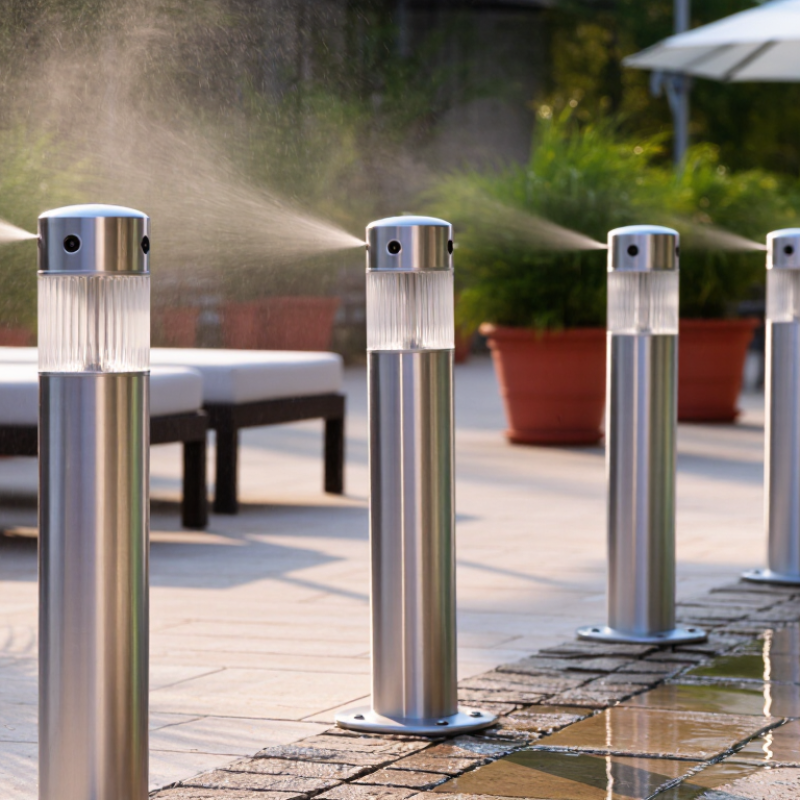
Outdoor misting poles are freestanding cooling structures designed for patios, gardens, terraces, and commercial outdoor areas.
They carry small misting nozzles along a vertical or curved frame. A pump pushes filtered water through these nozzles under pressure. The water breaks into fine droplets, which absorb heat as they evaporate. This process can reduce surrounding temperatures without soaking nearby furniture.
Performance depends on more than nozzle count.
Airflow, humidity, water pressure, and installation height all matter. In dry, breezy conditions, evaporation is usually faster. In humid weather, some droplets may remain visible or settle on the ground.
Results are rarely perfect. A pole placed too close to a wall may create uneven cooling. Poor filtration can also block tiny nozzles and weaken the spray pattern. Buyers should check materials, pump capacity, replacement parts, and maintenance instructions before ordering from an outdoor misting poles supplier.
Tips:
Use clean, filtered water and flush the lines regularly. Position poles where air can move freely. Test the spray before opening the area to guests. Keep electrical connections protected from water. A simple pressure gauge helps identify problems early. Do not assume stronger pressure always means better cooling; excessive force can waste water and create unwanted wetness.
Key Features of China’s Outdoor Misting Pole Suppliers
China’s outdoor misting pole suppliers often combine metal fabrication, water-system assembly, and export experience. Many provide stainless steel or powder-coated poles for gardens, patios, restaurants, and temporary cooling areas. Their key advantage is flexible production. Buyers can request different heights, nozzle spacing, colors, base designs, and power options.
A reliable supplier should explain pressure requirements clearly. Fine mist depends on pump performance, filtration, nozzle quality, and water cleanliness. Suppliers with practical experience usually test spray coverage in real outdoor conditions. They may also check leaks, pole stability, electrical protection, and packaging strength before shipment. Some offer sample units, installation drawings, spare nozzles, and operating instructions. These details matter more than attractive catalog images.
Customization is useful, but it can create hidden problems. A taller pole may need a heavier base. A denser nozzle layout may increase water demand. Some suppliers respond quickly but provide weak technical documents. That should invite careful questions, not immediate trust. Ask for material specifications, test records, replacement-part availability, and clear quality responsibilities. A supplier’s authority comes from consistent evidence and communication. Even experienced manufacturers can miss small fitting issues. Independent sample testing remains a sensible step before large orders.
How to Compare Outdoor Misting Pole Manufacturers
China Top Outdoor Misting Poles Suppliers for Global Buyers
When comparing outdoor misting pole manufacturers, examine performance before appearance. A polished catalog can hide weak testing procedures. Request nozzle flow data, operating pressure ranges, cooling coverage, and water consumption figures. Reliable suppliers should explain how their poles perform in heat, wind, and frequent cleaning conditions.
Inspect the materials closely. Stainless steel grades, internal tubing, seals, and nozzle fittings affect service life near pools or coastal areas. Ask for production photos, sample units, inspection records, and clear warranty terms.
Factory experience also matters. A manufacturer serving commercial courtyards may understand installation loads better than a general metal workshop. However, large production capacity does not always mean better quality. This is easy to overlook. Check whether each batch receives pressure and leakage tests before shipment.
Tips: Compare identical specifications, not attractive prices. Ask for one complete sample. Test its spray pattern outdoors. Confirm spare nozzle availability, packaging strength, lead times, and installation guidance. A supplier should answer technical questions directly, without vague promises. Review independent customer feedback when possible, but treat every testimonial carefully. One honest limitation may show more reliability than perfect marketing language. Also, calculate total ownership costs, including filters, replacement parts, labor, and seasonal storage. The cheapest pole can become expensive after one difficult summer.
Customization, Quality Control, and Export Capabilities
China Top Outdoor Misting Poles Suppliers for Global Buyers
Customization, Quality Control, and Export Capabilities
Reliable Chinese suppliers usually begin with the installation environment. They check pole height, nozzle spacing, water pressure, wind exposure, and connection standards. Outdoor projects may need stainless steel fittings, UV-resistant tubing, or powder-coated aluminum poles. Custom drawings help prevent expensive changes later. Details matter.
Professional suppliers should provide sample testing before mass production. Inspectors can measure pole straightness, thread accuracy, coating thickness, and nozzle flow. Pressure tests should reveal leaks at joints and valves. Packaging also deserves attention, because long poles can bend inside weak cartons. Small errors spread.
Export experience involves more than arranging shipment. Suppliers should prepare accurate commercial invoices, packing lists, product specifications, and loading photos. They should explain carton dimensions, container capacity, and replacement procedures clearly. Communication should remain practical across time zones. No supplier gets every detail right. A rushed sample can hide problems that appear after installation. Buyers should request inspection records and confirm how defects are handled. A careful supplier welcomes those questions, even when they slow the order. That attitude often shows more reliability than a polished sales promise.
China Outdoor Misting Poles: Customization, Quality Control & Export Readiness
This reference chart summarizes practical RFQ checkpoints commonly used by global buyers when evaluating outdoor misting pole suppliers. The figures represent specification and export-planning references rather than company or brand performance data.
How Global Buyers Can Select the Right Supplier
China Top Outdoor Misting Poles Suppliers for Global Buyers
Global buyers should evaluate suppliers beyond attractive catalogs and low quotations. A reliable supplier should provide clear factory details, production photos, and traceable quality records. During supplier checks, inspect stainless steel grades, pole thickness, nozzle performance, and base stability. Small details matter outdoors. Ask for a working sample before placing a large order. The sample should run continuously and show even mist distribution.
Technical communication also reveals supplier expertise. Request water-pressure ranges, flow rates, nozzle spacing, pump requirements, and recommended coverage. Suppliers should explain performance in wind, heat, and humid conditions. Avoid vague claims such as “maximum cooling.” Ask for test data instead. Product drawings, packing dimensions, installation instructions, and maintenance guidance should be available in clear English. Missing documents may create costly delays.
Compliance and after-sales support deserve equal attention. Confirm relevant material reports, electrical documents, inspection procedures, and destination-market requirements. A capable supplier can arrange pre-shipment inspection and explain how defects are handled. Check production capacity against your actual order schedule, not an impressive monthly figure. Visit the factory when possible, or use an independent audit. Price is important, but the cheapest offer can hide thinner materials, unstable pumps, or weak packaging. I have seen buyers focus too heavily on unit cost and regret it later. Even experienced purchasers miss something sometimes. Keep written specifications, approval samples, and delivery terms in the contract.
FAQS
Request nozzle flow rates, operating pressure, cooling coverage, and water consumption. Ask for test results in heat and wind. Samples matter.
Check the stainless steel grade, pole thickness, internal tubing, seals, and nozzle fittings. These parts face moisture, cleaning, and outdoor exposure. Small details matter.
Yes. Request one complete working sample. Run it continuously outdoors and inspect mist distribution, base stability, leakage, and spray coverage.
Request production photos, inspection records, and batch testing details. Confirm pressure and leakage tests happen before shipment. High capacity alone proves little.
Ask for drawings, pressure ranges, flow rates, nozzle spacing, pump requirements, and coverage guidance. Installation and maintenance instructions should use clear English.
Confirm packaging strength, replacement nozzle availability, and spare-part lead times. A damaged base or missing nozzle can delay installation. This is easy to overlook.
Compare identical specifications, not attractive quotations alone. Include filters, replacement parts, labor, shipping, and seasonal storage. A low price may age badly.
Keep approved samples, written specifications, inspection procedures, and delivery terms in the contract. Consider an independent factory audit or pre-shipment inspection. Mistakes still happen.
Conclusion
Outdoor Misting Poles are practical cooling systems designed to release fine water mist through strategically positioned nozzles, helping reduce perceived temperatures in outdoor areas such as patios, restaurants, event spaces, gardens, and commercial facilities. This article explains their working principles, including water pressure, nozzle performance, pole structure, coverage range, and installation requirements. It also highlights the key features commonly offered by China’s suppliers, such as durable materials, efficient components, flexible designs, and competitive production capabilities.
For global buyers, selecting the right manufacturer requires more than comparing prices. Important factors include product quality, customization options, manufacturing consistency, inspection procedures, packaging, communication, and export experience. Buyers should evaluate whether a supplier can provide suitable dimensions, finishes, misting configurations, accessories, and technical support for their intended application. By comparing specifications, quality control systems, delivery capacity, and after-sales service, customers can identify a reliable supplier of Outdoor Misting Poles that meets project requirements and supports stable long-term cooperation.