
The source articles were not included, so I can’t verify an industry report or an expert’s exact quotation. Please provide the articles or a trusted expert quote, and I can write the requested introduction without inventing a citation.
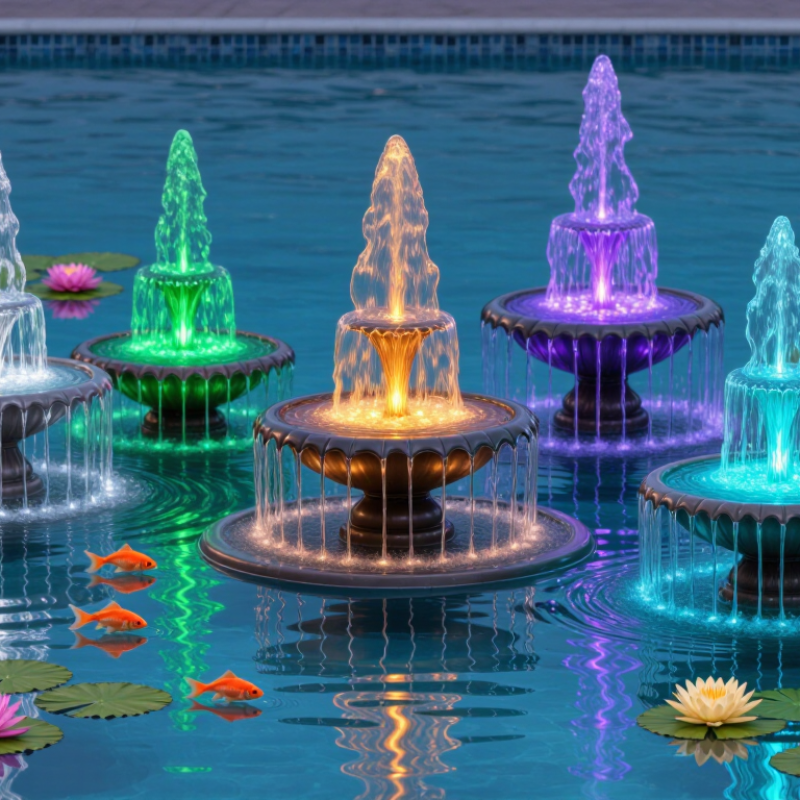
Underwater fountain lighting does more than make water visible after dark. Carefully aimed beams reveal falling streams, bubbling jets, and the changing texture of a basin. They also help visitors see the fountain’s edges and nearby steps. Color can add atmosphere, but white light often shows water movement more clearly. A practical design starts with the viewing distance, water depth, and the fountain’s nighttime surroundings.
LEDs are common in modern installations because they use less energy than older lamp types. The U.S. Department of Energy’s Energy Saver guidance says LEDs use at least 75% less energy and can last up to 25 times longer than incandescent lighting. Those figures compare lamp technologies, not every underwater fixture; sealing, heat, and maintenance affect real-world performance. Underwater lights can also reveal algae or cloudy water more than expected. A small test after dark is worthwhile.
Tips: Check the fixture’s stated submersion rating and follow its installation instructions. Aim beams away from direct sightlines to reduce glare on wet paving. Start with fewer lights, then adjust their angles from the main viewing area. One shadow may remain. That is a useful reminder: water movement changes the effect, so review the layout with the fountain running.
Underwater fountain lights differ in mounting, beam control, and color. Seven practical types are niche-mounted, surface-mounted, flush-mounted, fixed-white, RGB, RGBW, and DMX-controlled lights. Niche-mounted units sit inside a recessed housing. Surface-mounted models attach directly to a basin wall, while flush-mounted lights create a cleaner profile. Fixed-white lights suit clear, steady illumination. RGB and RGBW options add colored scenes; DMX control allows timed changes across multiple fixtures. Small details matter.
LED performance is another buying factor. The U.S. Department of Energy’s Energy Saver guidance says LEDs use at least 75% less energy and can last up to 25 times longer than incandescent lamps. These are general lighting comparisons, not guaranteed fountain-light results. Water temperature, sealing, operating hours, and installation can affect actual performance. Check the fixture’s stated underwater rating, beam angle, cable length, and service access before choosing.
Tips: Compare beam spread against the fountain’s depth; a narrow beam can leave broad surfaces dim. Ask how seals and cable entries are inspected, not just how bright the light looks in a showroom. A highly animated color system may be impressive, but it can feel excessive in a small courtyard.
Underwater fountain lighting should be selected by viewing distance, water clarity, and access for maintenance—not wattage alone. White LEDs show stone texture clearly, while RGB fixtures create changing color effects. Keep it simple. For a still basin, fixed white light can look calmer and make splashing water easier to read.
The U.S. Department of Energy’s Energy Saver guidance says LEDs use at least 75% less energy and last up to 25 times longer than incandescent bulbs. These are general lamp comparisons, not a promise about a sealed underwater fixture. Seal quality, heat control, and the driver affect real service life. The International Energy Agency’s 2023 Energy Efficiency report estimates lighting accounts for about 15% of global electricity use; that figure describes lighting overall, not fountains specifically.
Beam angle shapes the scene. A narrow beam can pick out a jet or sculpture, but may create harsh bright spots. A wider beam spreads light across a shallow pool, though nearby surfaces can appear washed out. Test the fixture at its actual mounting depth: water, bubbles, and pale stone change the result. Warm white can soften masonry; cooler white may make water appear crisper. There is no perfect setting. Color preferences can shift once the fountain is running.
Choosing underwater fountain lights starts with the basin, not the color menu. A narrow spotlight can pick out a single jet, while a wide-beam fixture spreads light across a broad spray. Small basins usually need fewer, lower-output lights; oversized fixtures can create glare and wash out the water. For a tiered fountain, place lights near the falling water, but keep them out of direct view where possible. Measure the basin and note the water depth before comparing fixture dimensions.
Water and power ratings matter just as much. Choose fixtures explicitly rated for continuous submersion at the intended depth, with sealed connections and cables long enough to reach the power source without stretching. Low-voltage LED systems are often practical for outdoor fountains, but the transformer must match the total load. Warm white gives stone a natural look; color-changing lights suit shifting effects, though they can make clear water look busy. Check service access, too. A light that is hard to remove becomes a nuisance.
Tips: Test the beam after dark using a temporary light position. Watch for reflections on nearby windows. Leave a little cable slack, but keep it tidy and protected. Follow the fixture instructions, and ask a qualified electrician to check the supply and connections. One detail is easy to miss: water movement changes the effect, so a setup that looks balanced when still may feel uneven once the fountain runs.
Compare representative power ratings to match lighting with fountain size and electrical capacity.
Wattages are illustrative examples of commonly available LED fixture ratings, not a universal sizing standard. Larger fixtures generally suit larger displays, but brightness also depends on light output, beam angle, water clarity, and placement. Choose fixtures specifically rated for continuous submersion, and check the transformer’s capacity and installation requirements before buying.
Underwater fountain lighting performs best when fixtures suit the basin’s depth, water movement, and access points. Before installation, check the fixture’s submersible rating and inspect its cable for cuts or worn insulation. A damp-location fitting is not automatically safe underwater. Use a correctly sized low-voltage transformer and ground-fault protection, following the product instructions and local requirements. Keep electrical connections accessible and out of the water unless they are specifically rated for immersion. Never handle wiring with wet hands.
Tips: Switch off power at the supply before adjusting a fixture. Route cables away from sharp stone edges and moving pump parts. Leave enough slack for careful removal, but avoid loose loops that can snag during cleaning.
After installation, test each light and look for flickering, water inside the lens, or unusual warmth. Clean mineral film with a soft cloth and a cleaner approved for the fixture; abrasive pads can cloud the lens. Check seals and cable entries during routine fountain cleaning, especially after winter or heavy debris. Replace damaged components rather than patching them. One easy detail to overlook is access: a light that looks neat but cannot be removed safely makes future maintenance harder. If wiring, protection, or grounding is unclear, ask a qualified electrician.
Measure the basin width and water depth first. Small basins usually need fewer, lower-output lights. Oversized fixtures may create glare and flatten the water’s appearance.
Use a narrow beam for one strong jet. Choose a wide beam for broad sprays or falling sheets. Test the beam after dark.
Place them near the falling water, but hide them from direct view when possible. Reflections can appear on nearby windows.
Choose a fixture rated for continuous submersion at the fountain’s intended depth. A damp-location fitting is not automatically safe underwater.
Check the total wattage before choosing a transformer. Use correctly sized low-voltage equipment and suitable ground-fault protection.
Warm white can make stone look natural. Color-changing light creates movement, but clear water may appear visually busy. Sometimes simpler looks better.
Inspect cables for cuts, worn insulation, and damaged seals. Keep connections out of the water unless they are specifically rated for immersion.
Switch off power before adjustment. Clean mineral film with a soft cloth and approved cleaner. Replace damaged parts instead of patching them.
Look for flickering, water inside the lens, or unusual warmth. Water movement can change the balance, so still-water testing is incomplete.
Underwater Fountain Lighting can transform a fountain into a striking feature after dark while improving the visibility of its water patterns. This guide introduces the main purposes of underwater lights and compares seven common options, including differences in light sources, color choices, brightness, and beam angles. Understanding these characteristics helps buyers select lighting that suits the fountain’s design and the atmosphere they want to create.
The right choice also depends on fountain size, water conditions, and available power. Before installation, consider suitable placement, secure electrical connections, and protection from water exposure. Regular inspection and cleaning can help maintain performance over time. By weighing appearance, practical requirements, safety, and upkeep together, buyers can choose a lighting setup that complements their fountain and works reliably in its intended setting.