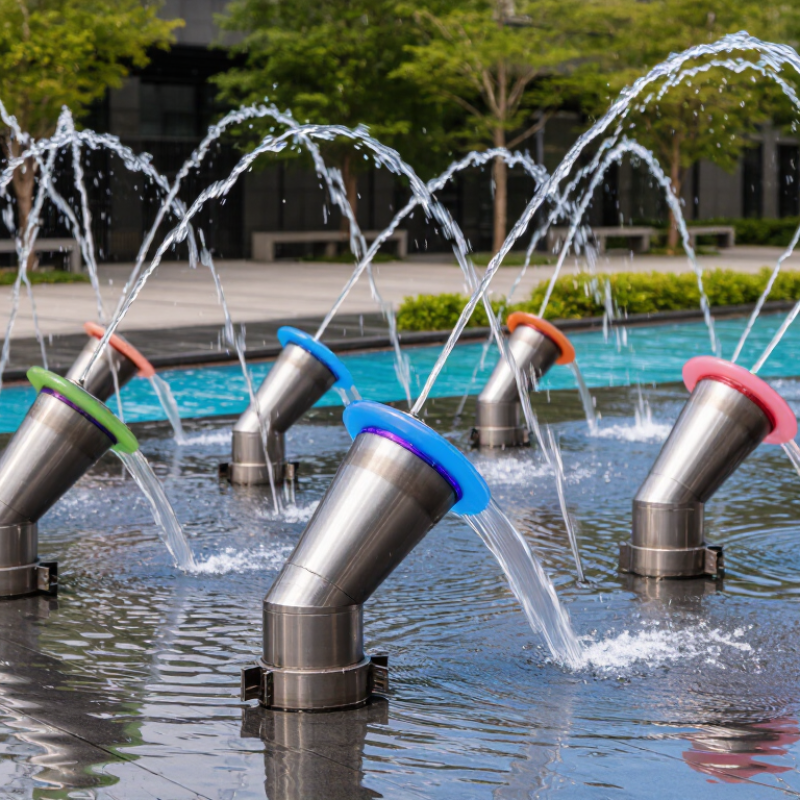
Choosing the right Jumping Jet Nozzles requires more than comparing spray height and price. Global buyers must assess water quality, pump pressure, lighting compatibility, maintenance access, and local climate. A nozzle that performs beautifully in a showroom may clog beside a dusty public plaza.
Industry data supports careful water management. The United Nations World Water Development Report 2024 highlights growing pressure on freshwater resources and infrastructure. The FAO AQUASTAT database also shows major differences in water availability between regions. These findings matter because jumping jets recirculate water, but they still lose volume through evaporation, splash, filtration, and cleaning. Efficiency is not optional.
Market reports, including Grand View Research’s irrigation machinery analysis, indicate continued investment in automated water systems and resource-efficient equipment. However, decorative fountain nozzles are often grouped with broader irrigation or water-feature categories. That comparison is imperfect. Buyers should therefore verify technical claims through manufacturer datasheets, test videos, and independent project references.
In practical testing, measure the jet at the intended operating pressure, not only at maximum pressure. Watch the landing point. Check whether the stream breaks cleanly after repeated cycles. Stainless steel bodies usually suit demanding outdoor environments, while poorly protected electrical components may create long-term service problems.
Small details matter.
This guide reviews seven Jumping Jet Nozzles for global buyers, focusing on flow control, construction quality, installation flexibility, visual consistency, and after-sales support. It also considers shipping realities, spare parts, voltage requirements, and regional service capacity. No ranking is perfect. Buyer priorities differ, and a quieter, easier-to-maintain nozzle may outperform a more dramatic model in real projects.
What Are Jumping Jet Nozzles and How Do They Work?
Jumping jet nozzles are specialized water outlets that create separate, clear arcs instead of a continuous spray. A pump pushes water through a narrow chamber and outlet. A fast valve then opens and closes at timed intervals. This action releases short, controlled streams that appear to leap between fixed points. Some systems add lights beneath the water path. The effect is precise, but sensitive to pressure changes.
The best jumping jet nozzle depends on flow rate, operating pressure, inlet size, material, and control compatibility. Stainless steel handles outdoor exposure well, while properly sealed components reduce internal corrosion. A buyer should also check filter requirements and cleaning access. Fine particles can disturb the jet shape. Even a small pressure drop may cause a stream to fall short. Technical drawings and tested performance data are more useful than attractive product images.
In practical installation, water quality often becomes the hidden problem. Hard water can leave mineral marks around the outlet. A suitable filter and regular inspection usually help. The term “best” is not absolute. A nozzle that performs well in a hotel display may be unsuitable for a compact garden. I would request a sample test under the planned pressure. Real conditions expose weaknesses that specifications sometimes miss. Timing accuracy matters too. Poor synchronization can make several jets look uneven.
Key Features to Compare Before Choosing a Jumping Jet Nozzle
When comparing jumping jet nozzles, measure the required arc height, throw distance, and water volume. A dramatic stream needs stable pressure, not merely a larger pump. Check the operating range in liters per minute and the pressure range in bar. These figures reveal whether the nozzle suits your basin, pipework, and pump. Look for corrosion-resistant stainless steel or engineered polymer parts. Material matters outdoors. Salt air, chlorine, and hard water can shorten service life. Ask for flow charts, dimensional drawings, and tested spray photographs.
The jet’s control system deserves close attention. Choose models with adjustable timing, clean shutoff, and repeatable movement. A smooth transition reduces splashing and keeps nearby paving safer. For public installations, confirm electrical protection, grounding requirements, and maintenance access with a qualified technician. Noise can also matter near hotels, homes, or quiet gardens. Test the nozzle at low and high pressure. It may behave differently. Check inlet size and connection type before ordering internationally. Metric dimensions do not always match local fittings.
Reliable suppliers should provide inspection records, spare-part guidance, and clear warranty terms. Independent test data is more useful than polished claims. Ask how the nozzle performs after repeated cycles and seasonal cleaning. A removable filter can reduce blockage from grit and leaves. Still, filters need regular attention. Experienced installers sometimes select a taller jet than the site can support. That choice looks impressive on paper. It can create wind-blown spray and wasted water. Compare total ownership cost, shipping protection, local service, and replacement availability. A specification sheet can still miss real-site problems.
How to Match Nozzle Design With Water Feature Applications
Choosing among seven jumping jet nozzle designs starts with the water feature, not the product label. The best nozzle must suit the pool length, viewing angle, pump capacity, and lighting plan. A laminar nozzle creates a smooth, glass-like stream for quiet courtyards. An adjustable model helps compensate for uneven installation levels. Wider outlets produce softer arcs, while narrow outlets create sharper, more visible jumps.
Site conditions can change the result. Wind, water temperature, and mineral buildup affect stream stability. I have found that a nozzle performing well indoors may lose its shape outdoors. Test the stream at the intended height and distance. Short tests matter. Measure actual flow, pressure, and splash before final installation. A stainless internal passage may support long service, but only when filtration and cleaning routines are suitable.
Public pools need controlled splash and safe access around wet surfaces. Residential gardens may favor easy adjustment and quieter operation. Interactive features require faster response and precise alignment. One common mistake is selecting a nozzle by arc height alone. The landing point matters more. Leave access space for maintenance, even when the design looks compact. A perfect stream on opening day can become uneven later. That possibility deserves attention. Surface level, lighting glare, and pump reserve should be checked again before approval.
Installation, Maintenance, Safety, and International Buying Factors
7 Best Jumping Jet Nozzles for Global Buyers?
Choosing a jumping jet nozzle involves more than arc height and appearance. Installers should match the nozzle orifice, pump curve, pipe diameter, and operating pressure before purchase. A level base matters. Even a small tilt can make seven jets land unevenly. Add a removable intake screen, isolation valve, and accessible drain. These details reduce cleaning time and prevent debris from reaching the pump. UNESCO’s 2024 World Water Development Report states that agriculture represents about 70% of global freshwater withdrawals. A recirculating fountain still needs sensible flow control, leak checks, and splash reduction.
Maintenance should include weekly screen inspection during heavy use, plus periodic checks for scale, blocked orifices, cracked seals, and loose fittings. Hard water may require non-abrasive descaling. Do not enlarge an orifice casually; pressure balance can change quickly. The U.S. Department of Energy’s pumping-system guidance notes that pumping systems can consume 25% to 50% of electricity in some industrial facilities. Efficient pump selection therefore affects operating cost, not only visual performance. A perfect spray pattern on day one proves little.
Safety requires guarded electrical connections, residual-current protection, safe cable routing, and lockout procedures before servicing. WHO’s 2024 drowning fact sheet estimates 236,000 drowning deaths worldwide each year. Keep children out. For international buying, confirm voltage, frequency, thread standards, customs documents, material certificates, spare-seal availability, and local service support. Stainless steel may resist corrosion, but water chemistry still matters. I have seen buyers overlook replacement screens. That small omission can stop the whole display.
Conclusion
Jumping Jet Nozzles are specialized water-feature components that create rhythmic, arching streams by controlling water flow through carefully designed outlets. Their performance depends on factors such as nozzle diameter, shooting distance, stream clarity, lighting compatibility, flow rate, pressure requirements, and resistance to corrosion. This guide introduces seven leading nozzle types, including compact, high-trajectory, adjustable, illuminated, synchronized, modular, and heavy-duty designs, helping global buyers compare options according to project scale and visual goals.
Choosing the right nozzle requires matching its design to the application, whether for fountains, landscape installations, entertainment spaces, public areas, or indoor features. The article also explains essential considerations for installation, alignment, filtration, pump sizing, cleaning, routine maintenance, splash control, and user safety. For international purchasing, buyers should additionally review material quality, technical documentation, packaging, spare-part availability, communication standards, shipping conditions, and local installation requirements before making a final decision.