
Commercial fountains do more than fill a plaza with sound. They shape first impressions, guide foot traffic, and give people a reason to pause. Yet a striking render can hide practical problems: difficult access, wind-blown spray, noisy pumps, or excessive water demand. This guide to 10 Best Bespoke Fountain Systems for Commercial Buyers looks beyond appearance, comparing customization, controls, maintenance access, and fit with the site.
The U.S. Environmental Protection Agency’s WaterSense at Work guidance reports that commercial and institutional facilities use about 17% of publicly supplied water in the United States. That figure covers facilities broadly; it is not a fountain-specific estimate. Still, it makes water planning part of responsible procurement. Ask suppliers how systems manage recirculation, evaporation, filtration, and seasonal shutdowns. Request operating assumptions, not just a concept image.
Landscape architect Frederick Law Olmsted described scenery as something that “tranquilizes it and yet enlivens it” in his 1865 writing on Yosemite. His words offer a useful design test: does a feature invite attention without overwhelming the people or architecture around it? A quiet courtyard may need a low basin and gentle flow; a busy entrance may call for greater visual presence. There is no perfect specification. A beautiful system can still be awkward to service, and that deserves honest scrutiny. The selections ahead help commercial buyers compare bespoke options with both experience and long-term operation in mind.
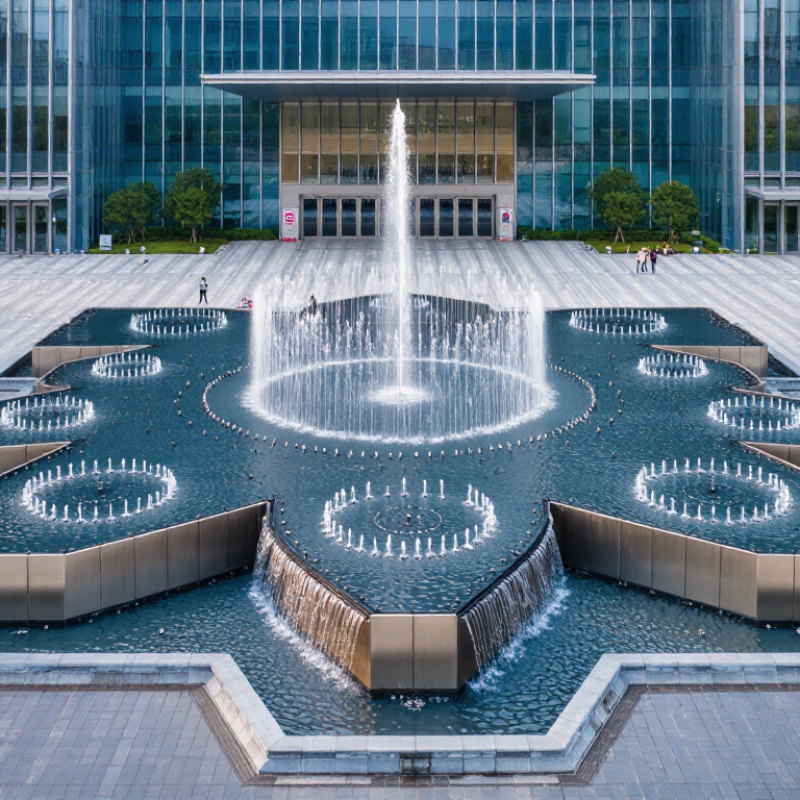
A bespoke fountain system for commercial use is designed around the site, operating demands, and maintenance capacity—not just a preferred shape. Its basin depth, pump output, filtration, controls, and pipe routes should be specified together. A plaza exposed to gusts may need lower jets and careful splash control. A hotel courtyard may prioritize quiet operation and clear evening lighting. The details matter. Designers should confirm water access, drainage, electrical capacity, and service access before drawings are finalized. A beautiful feature is less practical if technicians must remove paving to reach a clogged strainer.
Tips: Ask for a maintenance plan covering filter-cleaning intervals, seasonal shutdown steps, and expected water and energy use. Keep access visible. Request a nozzle test when spray height or wind behavior is uncertain.
Commercial customization also means matching controls to real operating patterns. Timed schedules, adjustable flow, and fault alerts can reduce unnecessary operation, but only if staff can use them. Specify who will monitor alerts and maintain water quality. This is often overlooked. One limitation is easy to miss: a single site visit may not reveal seasonal wind or crowd patterns. Review the installation after opening, then adjust settings based on observed splash, noise, and service calls.
A practical comparison of custom fountain system types, their typical commercial applications, and the design requirements buyers should evaluate.
| System Type | Typical Commercial Setting | Core Configuration | Best Suited To | Key Design and Operating Checks |
|---|---|---|---|---|
| Programmable Musical Fountain | Public plazas, entertainment venues, resorts, and civic spaces | Individually controlled water jets, variable-speed pumps, lighting, and a synchronized control system | Sites that need scheduled shows or changing water patterns for events | Coordinate water, lighting, and sound controls; plan for show programming, safe viewing areas, and routine nozzle and pump maintenance. |
| Interactive Splash Pad | Family attractions, parks, hotels, and mixed-use developments | Ground-level spray features, user-activated controls, drainage, and a recirculating treatment system | High-use areas designed for direct visitor interaction | Provide slip-resistant surfaces, accessible routes, effective drainage, water treatment, and controls that manage operation during low-use periods. |
| Dry-Deck Fountain | Shopping districts, plazas, campuses, and event spaces | Flush deck nozzles with an underground collection basin, filtration, pumps, and controls | Public spaces that need to function as both a fountain area and an open plaza | Allow access to below-deck equipment, account for drainage capacity and surface loading, and coordinate nozzles with paving and pedestrian circulation. |
| Reflecting Pool with Water Features | Corporate campuses, museums, hotels, and memorial settings | Shallow basin with recirculation, filtration, and optional low-profile jets or cascades | Quiet, formal settings where reflection and visual calm are priorities | Consider wind-driven water loss, overflow and make-up water, basin access, water quality, and the effect of nearby trees or debris. |
| Architectural Jet Fountain | Building entrances, courtyards, transport hubs, and commercial forecourts | Designed jet patterns using selected nozzles, pumps, pipework, and a collection basin | Projects that need a defined focal point or a fountain integrated with architecture | Set jet height and direction for local wind conditions; check splash containment, pump access, and coordination with building services. |
| Cascade or Tiered Fountain | Hotels, gardens, shopping centers, and landscaped public areas | Water moving across stepped surfaces or basins, supported by recirculating pumps and filtration | Sites seeking a continuous water feature with a strong visual and acoustic presence | Design for reliable water distribution, safe access around wet surfaces, cleanable catch basins, and control of splash and overflow. |
| Aerated Lake or Pond Fountain | Golf courses, business parks, campuses, and large landscaped properties | Floating or fixed spray equipment with a pump and intake arrangement suited to the water body | Large ponds where a visible display or supplementary water movement is required | Confirm water depth, intake conditions, electrical protection, anchoring, and maintenance access; a fountain should not be assumed to replace a complete lake-management plan. |
| Indoor Feature Fountain | Hotel lobbies, atriums, offices, and enclosed retail spaces | Compact recirculating basin or wall feature with pumps, filtration, and controlled water movement | Interior environments where sound, appearance, and spatial integration matter | Account for humidity, splash control, waterproofing, indoor air systems, cleaning access, and noise levels appropriate to the space. |
| Mist and Fog Feature | Outdoor plazas, gardens, hospitality areas, and shaded public spaces | Fine-spray nozzles supplied by a pressure system, with filtration and programmable controls | Projects seeking a light atmospheric effect rather than a conventional high water jet | Evaluate wind direction, water quality, nozzle maintenance, nearby surfaces, and local health and safety requirements for aerosol-producing systems. |
| Water-Reuse Fountain System | Commercial landscapes and developments with water-efficiency objectives | Recirculating fountain equipment combined with an appropriate source, storage, filtration, and treatment arrangement | Projects able to assess reclaimed or alternative water sources for non-potable use | Verify local regulations, source-water quality, treatment requirements, labeling, cross-connection protection, and ongoing monitoring before selecting the water source. |
Selection note: “Bespoke” means the fountain layout, hydraulics, controls, materials, treatment, and maintenance access are designed for the specific site and operating requirements. Final sizing and compliance requirements depend on site conditions and local codes.
Architectural jet fountains create height and movement. Dry-deck fountains let visitors cross the area when the water is off. Wind matters.
Wind may carry spray onto nearby paving and make it slippery. Lower jets and tighter spray patterns can help.
Plan access panels and drainage beneath the paving. These details support maintenance and flexible event use. They are easy to overlook.
Reflecting pools suit gardens and entrances where still water can frame architecture. Indoor water walls fit lobbies, but pump noise may disrupt quiet spaces.
Check flow rate, operating pressure, nozzle height, expected water loss, and water depth. Clear measurements make proposals easier to assess.
Dust, leaves, and visitor traffic affect cleaning schedules. Inspect water levels, nozzle alignment, seals, and pump noise regularly. No schedule catches everything.
Keep space around pumps and filters. Use removable access panels, document pipe routes, and photograph hidden pipework before finishing the basin.
Ask for commissioning readings, including flow and pressure. Keep them as a baseline. A change in pump sound may signal wear.
Include energy use, replacement parts, cleaning time, and specialist visits. Water treatment also needs monitoring; too much may damage finishes. Revisit the plan after the first busy season.
Bespoke Fountain Systems are designed around the practical and visual needs of commercial spaces, combining tailored dimensions, water effects, materials, lighting, and controls. This overview explains what makes a fountain system bespoke and how different configurations can serve destinations such as hotels, office campuses, retail centers, and public plazas. It also outlines key considerations for comparing options, including site conditions, design flexibility, water and energy use, safety, accessibility, durability, and control features.
The guide reviews ten types of commercial fountain solutions, highlighting the needs each may suit rather than promoting a particular brand. It also considers the factors that shape long-term value, from planning and installation to routine cleaning, equipment inspections, seasonal operation, and repairs. By weighing design goals against operating requirements and maintenance resources, buyers can select a fountain system that complements its setting and performs reliably over time.